Thursday, 6 June 2019

Cruising Under The Midnight Sun


Cruising holidays are becoming increasingly popular, so much so that somewhere in the region of 314 ships, capable of carrying 537,000 passengers were in service at the end of 2018, and the total number of passengers carried that year was around 26 million.[1]

When I first met my wife, she was working for P&O Cruises, and a major perk of her job was cheap holidays on their ships, so naturally the first holiday we took together was a cruise, on the long since decommissioned SS Canberra, which notably had been requisitioned as  a troopship during The Falklands War in 1982.  As impressive as Canberra was, with her capacity of 1,700 guests and a tonnage of 49,000 tons, she would now be dwarfed by ships such as Royal Caribbean's Symphony of The Seas, which can carry up to 6,600 passengers, and which weighs in at 228,000 tons. Canberra was recognisable as a ship, but today most cruise ships look more like hotels that have been plonked on a barge, and while Canberra had all the amenities that a cruise passenger might expect in the 1990's, today's behemoths include facilities for activities previously completely unassociated with cruising, like rock-climbing and zip-lines.

Recognisably a ship, SS Canberra...

...while the Symphony of The Seas is more a hotel that floated away.

Even in the 1990s, when I took my first cruise, the perception of the typical passenger was either the "newly wed or the nearly dead," and that cruise holidays were for the wealthy or otherwise were a once in a lifetime experience. More, and larger ships, offering a wider range of amenities, has meant more competitive pricing and greater capacity. The average age of cruise passengers is coming down, cruising has lost its exclusivity and elitist image, and is now more egalitarian and family oriented.

After Val left her job at P&O, we stopped going on cruise holidays, apart from a trip to the Hawaiian islands in 2009 on Golden Princess, which at 108,000 tons and carrying 2,600 passengers remains the largest ship I have sailed on, albeit that it is a minnow compared with Symphony of The Seas. 

Golden Princess moored at Hilo during our cruise to Hawaii in 2009

The atrium aboard Golden Princess

This year, however we have taken a cruise of quite a different nature to what, one imagines, is the norm these days; we've just returned from a knitting themed cruise to Norway. I am not a knitter, but Val is, and in recent years she has been following Carlos Zachrison and Arne Nerjordet, a pair of designers and celebrity knitters, on YouTube. Apart from their YouTube channel, Arne & Carlos, as they are more commonly known, have published a number of books and make regular tours showcasing and demonstrating their work, so when Val discovered that they were knitting under the Midnight Sun on a cruise along the Norwegian coast, she was keen to take part and combine her interests in knitting and cruising[2]. Despite my lack of interest in knitting, I went along for the ride, and the scenery.

The ship, the MS Finnmarken is part of the Hurtigruten company's fleet, and at 15,600 tons and carrying just 919 passengers, struck me at first sight as little more than a superannuated car ferry. And in some ways it was. 

MS Finnmarken berthed at Trondheim

The antithesis of the modern leviathans of the seas, the Finnmarken doesn't have the range of bars, restaurants and theatres that larger ships have. There's a single restaurant, a small cafe, a couple of bars, and a small swimming pool, but no theatre, no entertainment, and certainly no climbing wall! Unlike the 24/7 dining experience offered by the large ships of the Carnival and Royal Caribbean lines, there is little opportunity to stuff yourself between meals on the Finnmarken; this may have been the first cruise I have been on where I came home weighing no more than when I first embarked.


The Finnmarken is comfortable rather than luxurious, and the cabins are compact.

A feature of sailing on such a small ship is that one notices the movement a great deal more than on the larger ones. Thankfully, the Finnmarken's itinerary meant that by and large it hugged the coastline's calmer waters, but on the occasions when it ventured into the open sea, the pitch and sway were enough to keep us confined to our cabin a couple of times.

But it was nice to be part of a small company of passengers, of which fifty were part of the knitting group - 36 active knitters and 14 non-knitting partners and spouses - which gave this trip a more intimate feel; we met  some lovely people, and the small scale of the ship - and the fact that we were part of a group - meant that seeing the same people frequently allowed us to develop more of a rapport with them than might have been the case on a larger vessel. 

Arne & Carlos and their knitting group - I'm far right, in blue. Picture from Arne & Carlos's blog.

Arne and Carlos turned out to be charming hosts; naturally they devoted the bulk of their time to the knitters, but they were happy to chat with us non-knitters too. The knitting element of the trip consisted of lectures, and mystery knitting kit that saw all those who took part leave the ship with a cowl in various states of completeness.

Val hard at work knitting.

The finished product.


Val and I decided to travel to Norway a day before the cruise departed in order to avoid any possibility of delays on our flight from London making us late for the sailing, and we were glad we did as Bergen, where we stayed and from where Finnmarken sailed, was delightful, if - like everywhere in Norway - eye wateringly expensive. A meal in To Kokker, one of the restaurants in the Bryggen area, and consisting of two main courses, one dessert, one beer and one tea, weighed in at 1128NOK, which works out at about £102. A pint of beer on board Finnmarken costs a hefty 109NOK (nearly £10). As you might imagine, I decided to limit my consumption!

Beautiful Bergen.
Nidaros Cathedral in Trondheim.

The Finnmarken is not like your typical cruise ship in more ways than size. The last time Val and I went on a cruise to Norway - back in 1997 on P&O's Oriana - we called at just three ports (Narvik, Trondheim, and Bergen), the Finnmarken called at a staggering thirty-four, most for fifteen minutes to half an hour, to load or unload cargo, or embark and disembark the passengers who use the coastal services that the Hurtigruten line runs almost as a commuter service. The fact that Norway's major towns and cities, and therefore its population, are largely to be found along its coastline means that by sea is sometimes a more  logical and effective way of moving goods and people than by road. We stayed long enough at Ålesund, Trondheim, Bodø, and Tromsø to make it worthwhile disembarking, and at Trondheim we visited the Nidaros Cathedral, which was stunning.

Oriana in Romsdalsfjord on our 1997 cruise

Spitsbergen, again in 1997
Sadly, the weather was a bit of disappointment. Far from being The Land of The Midnight Sun, Norway - the northern bits anyway - turned out to be the land of Midnight Drizzle and Mist, although even then the scenery was stunning. In fairness, Bergen and the south were lovely - if a bit cool, unseasonably so, so everyone told us. But I wouldn't have missed this trip for the world, and highlights were the Troll Ladder Road, which had only reopened after the winter a couple of weeks previously, and where it snowed when we stopped to take advantage of the view, and Trollfjord, with its imposing rock faces rising above the ship, so close that you could almost reach out and touch them.
Finnmarken traversing Trollfjord last week. This picture
 was taken at 11pm, when it was still light, if not sunny.
Crossing the Arctic Circle, travelling north...

...and here's the certificate to prove it.

Cruising is these days a much less formal affair than it was even thirty years ago; formal attire at dinner is still expected on some evenings on some ships, however the Finnmarken was a completely casual affair. On this voyage it was the passage, the scenery, and the company that counted, not the tuxedos and the ball gowns.


Thursday, 16 May 2019

The Unpackaged Holiday


Every now and then, one reads a human interest story in the papers about a couple who have taken their annual holiday at the same time, in the same place, for each of the last thirty, or forty, or even fifty years. The piece usually goes something like this; "George and Ida Bradley believe that familiarity breeds contentment. The couple have been married forty years and for each of those years they have taken their fortnight's summer holiday at The Seaview Guest House in sunny Skegness, just forty miles from their home up the coast at Grimsby. Said George, a sprightly 72-year old, "We've simple tastes so it suits us." Ida (68) added, "We tried Spain one year, but it wasn't for us; too many foreigners and you couldn't get a decent cup of tea for love nor money. We decided to stick with Skegness and have never regretted it."


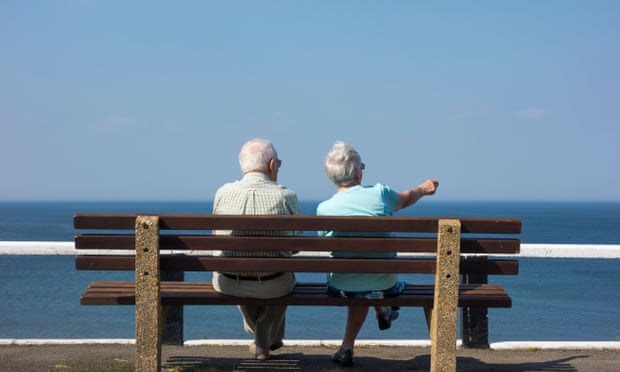
The same resort, the same guest house, the same bench, year after year, after year. Photo: Alamy

Whenever I've seen a story like that I've marvelled at the lack of imagination that makes it possible for people to go on holiday to the same place year after year, after year, but now I'm wondering if I haven't started to fall into the same pattern of behaviour myself, since my wife and I have just returned from our sixth visit to the same hotel, in the same resort, albeit that we travelled a bit further than the mythical Mr & Mrs Bradley. Back in 2015, we went to Cyprus for the first time, to stay at The Annabelle Hotel in Paphos. We liked it so much that we went back in 2016...and 2017...2018...and 2019 (twice, and it's only May!)

View from our hotel room at The Annabelle; this was last year.


We like The Annabelle for its understated elegance, for the peace and tranquillity that it provides, for the marvellous restaurants and wonderful food, and for the staff, who -one gets the impression - are proud to work at the hotel; this is clear from the exceptional level of service that they deliver, and the relationship they have with their guests - many of whom are clearly repeat visitors. Over the years that we have been going to the Annabelle we have seen a few changes, none drastic, all subtle and clearly made with the intention of improving the visitor's experience. It is good to see that the hotel is not content to rest on its laurels, but is constantly improving, to maintain and surpass its very high standards and quality. The resort of Paphos is a place that suits us too; it is refreshingly peaceful. Although there are a number of bars and restaurants by the harbour, the atmosphere is never raucous. Paphos also benefits from a coastline that affords the opportunity for some nice walks, which Val and I enjoy, to the extent that on our last visit, we walked just over seventy-miles - along the coast, and up to the old town. One of our trips took us by bus to Coral Bay, from where we walked the eight-and -a-bit miles back to Paphos. Buses on Cyprus are cheap (€1.50 for a single trip, €5 for a day pass), and fairly frequent, well worth using to get around.

On the walk from Coral Bay


A cold beer after a long walk...bliss!
Unusually, we booked this trip to Cyprus through a travel company (TUI), our normal practice in recent years has been to book direct with the hotel and arrange flights and transfers ourselves. Back in the 1980s, when I took my first overseas holidays, there was little choice in how you arranged your holiday. The normal practice was to go to a travel agent, arm yourself with a pile of brochures, pick a resort and a hotel, then go back to the agents where you would try and shoe-horn your requirements into what was available, which normally meant compromising on which resort, which hotel, or when you could travel. Saturday to Saturday bookings were the norm; customising dates was tricky, choosing your flights nigh on impossible, and since all transfers seemed to be by coach, it could be a couple of hours or more between landing and reaching your hotel, even if it was only a few miles from the airport, after all the other holidaymakers had been dropped off at their accommodation. Then came the internet and the budget airlines and suddenly, the need to use a travel agent and fit in with what they wanted to sell you went by the wayside. Customising holidays and dealing direct with hotels and airlines became easier and more flexible than using a travel agent.


In the years since I retired and Val went part-time at work, we have been able to be much more flexible in when we travel, which means that booking holidays normally starts with finding when the cheapest flights are to wherever we want to go, then matching the dates with hotel availability. That is when the chicken and egg situation arises; which to book first, the flights or the hotel? Book the flights first and there is the chance the hotel won't have vacancies - or not in the class of room you want - between those dates; book the hotel first and there's a risk that the flights will either be unavailable or suddenly hideously expensive. There's always a frisson of excitement as having booked the flights (our normal practice), we then try to book the room that was available just a few minutes before we paid for the flights. While my first overseas holidays involved fitting in with what travel agents had on offer, today the travel agents offer much greater flexibility, and it is probably moot as to whether it is better to book oneself or use an agent. The greater purchasing power that travel companies have tends to drive prices down and our last trip to The Annabelle was, thanks to TUI, slightly cheaper than the last one we booked independently. Mind you, we could have saved ourselves a few bob when we went independently had we not made the basic error of paying our bill in Euros and paying a hefty Non-Sterling Transaction Fee to the credit card company.

The Annabelle is part of the Thanos Group...


...nothing to do with the Marvel Comics character!
The major advantage to booking independently however, has been that for two out of our last three trips to Cyprus, Val has travelled a day or two before me, something that it might be a little trickier to arrange through a travel company. Also - and this might just be a coincidence - all the times that we have travelled independently, our plane has been the only one on the tarmac when we have arrived, making it easy to get a cab, even if we haven't booked a transfer, and I haven't bothered the last couple of times I have travelled alone; this time however six planes had landed in a short period of time and the arrivals hall was bedlam.
 
View from the Mediterraneo restaurant at The Annabelle

I have no doubt that at some point in the not too distant future we will be planning another trip to The Annabelle, and no doubt this will involve comparing the benefits of the package holiday v the unpackaged holiday; it's the sort of thing that spreadsheets were made for!

Wednesday, 15 May 2019

The Holiday Planner

They say that holidays are a major cause of stress, along with moving house or divorce, so by the time you read this I may well have been fairly stressed, since I will have just returned from a short break with some of my family. If the holiday proves to be as stressful as the process we went through booking it, then I may be very stressed indeed, although I hope not.

Someone has to stay to look after the hamster...

A few weeks ago we decided to book a short break since Val had some leave to take and Sarah had finished her exams. Rebecca could not get time off work and had a dressage competition at her riding school anyway, so was deputed to stay at home and mind the hamster. Our destination of choice was The Canary Islands, selected on the basis of our preconception that the weather is always decent there. It is one of those places that we instinctively feel will have good weather all year round, so we looked at hotels and flights to Tenerife. One of the great advances in booking holidays these days is the internet. Unlike years ago when booking holidays, and particularly booking flights, had to be done through a travel agent, at whose mercy one largely was, booking a flight and a hotel independently is just a few clicks away. This is both a blessing and a curse. The trade off is between the ease and speed and the sometimes impetuous nature of one's booking. We congratulated ourselves that within a matter of minutes we had booked a hotel in Tenerife and flights from Stansted with Ryanair.[1] We congratulated ourselves for the efficient and stress free experience of booking our holiday and sat back and began to start thinking about what we would do once we got to the resort, which is when things began to go awry.


Sarah, who is rarely without a laptop, smartphone or tablet to hand, looked at the weather forecast for Tenerife for the duration of our trip, something that perhaps we ought to have done before clicking away at airline and hotel websites in such a cavalier fashion. She reported that the weather was going to be, how can I put this, indifferent during our break, that is to say overcast with some rain and temperatures no higher than at home. Doubts set in. Were we doing the right thing? Should we have looked at other resorts? Should be cancel or change our plans? Indeed, could be cancel or change our plans? Why was the weather not as good as we expected? That last question could be answered by looking at historical weather statistics for Tenerife, which showed that in winter there was a big difference between there and home, but as the summer approached the difference was less marked and in June not much different at all, and given the respective forecasts for home and our destination this week, actually better at home.


Faced with the prospect of this...
...we chose somewhere that hopefully will look like this.


This was when serious doubts set in and we began to consider alternatives, if indeed there were any. Which in itself is something that one probably would not have contemplated in pre-internet days. I cannot imagine even considering going back to a travel agent less than a week before the departure date to try and change one's holiday, but now it is doable, albeit at a cost. In fact pre-internet one would not even have thought of it because either one would not have known about or even have tried to find out about the weather and would have arrived in the resort and made the best of whatever the weather was; I know I have had to do that many times in years gone by.

So, to the alternatives and much of it depended on what Ryanair would do and particularly if they flew to whichever destination we chose as an alternative to Tenerife. I cannot begin to describe the convoluted conversations, considerations of alternatives and sometimes outlandish different solutions we chewed over, which included Greece, Egypt and Dubai to name but three. In the end we found that Ryanair had flights available to Cyprus for the period we wanted to travel. Next we located a hotel in Paphos that fitted the bill. Now came the tricky bit. Obviously one doesn't want to book the flights and then find that the hotel is fully booked; equally one doesn't want to book the hotel and find that there are no flights available. As it transpired, we managed to book both and cancel our original hotel booking with only a minimal charge. The new flights cost a little more than the originals and of course Ryanair added their admin fee, a fee which many people complain about. The popular press and their websites abound with people complaining about being  "ripped off"  by Ryanair when the fact is that the company are quite upfront about the fact that they charge low fares and high prices for extras or amendments.


The budget airlines and the internet have been responsible for majors changes to the way we take holidays. No longer are holiday makers at the mercy of the travel agents; being able to book direct with hotels and airlines has revolutionised holidaymaking and it is now the norm (on short haul flights at least) for passengers to take only hand luggage. There is of course always that air of tension when approaching check in with hand luggage: will it fit the airline's restrictions? Yes, you measured and weighed it before you left home but somehow the airline's measure often seems a bit stingier. On more than one occasion I have seen passengers reconfiguring their luggage at the gate!

Recent news suggests that our hand luggage may have to shrink in future, however. Currently there is quite a variation in the sizes airlines will accept, from BA's 56 x 45 x 25cm to Ryanair's 55 x 40 x 20cm or Wizz Air's 42 x 32 x 25cm. Now the International Air Transport Association (IATA) has come up with an "optimum" for cabin luggage of  55 x 35 x 20cm, which it says will mean that "theoretically everyone should have a chance to store their carry-on bags on board aircraft of 120 seats or larger". Good on the one hand that regardless of airline one would know what size bag one can take and good that you would know it could be stored in the overhead locker but not so good if your currently valid luggage is all too big. IATA cannot enforce the changes but I imagine that luggage makers and retailers would welcome the move and would be rubbing their hands together thinking about extra sales and extra profits.


I'm off to find a bag that meets Ryanair's size restrictions and to pack it. Hopefully this holiday won't be as stressful as the booking process. I'll let you know in a week or so!

NB: This blog was first published 16th June 2015


[1] I know a lot of people can scarcely find a good word to say for Ryanair, but (touch wood) our experiences have been universally positive.

Wednesday, 3 April 2019

Brexit Means Brexit...But What Does Brexit Mean?

Probably the biggest problem in writing about Brexit is that the second you finish, things change, but not definitively. Everything changes, but nothing changes. Seconds after finishing this, I read that after all four alternative versions of Theresa May's deal had been voted down (Tuesday 2nd April 2019), Labour's Yvette Cooper and the Tory's Sir Oliver Letwin had published a cross-party Bill to force the Prime Minister to table a motion to extend the 12th April Brexit date, with the intention that this be passed through all of its stages on Thursday 4th April. Where this leaves us is anyone's guess.


"Brexit means Brexit," said Theresa May  at the Conservative Party conference back in 2016, and others have parroted the same truism or something similar such as "Leave means leave," regularly ever since the result of the EU Referendum was announced what seems like a lifetime ago but was, in fact, less than three years since. But what does Brexit means Brexit actually mean, apart from the obvious, that the UK will leave the EU? Well, despite the fact that if social media is anything to go by, every one of the 17.4 million people who voted leave knew exactly what they were voting for, very few of them can have known what they were going to get, as is evidenced by the fact that at the time of writing, no one knows the terms on which we will leave the EU, nor when, nor (possibly) even if we actually will. What most of the 17.4 million do know now, however, is that whatever deal is being proposed, it isn't what they voted for.

Theresa May - still looking for a Brexit solution.

While Theresa May has been proving Einstein's theory of madness by bringing what is to all intents and purposes exactly the same deal to the Commons on three occasions (and possibly for a fourth) in the expectation of a different outcome each time, a series of indicative votes have seen defeat for every option - ranging from a customs union to a confirmatory public vote (not to be confused with a second referendum) -  that has been tabled. Over six million people signed the online petition calling on the Government to revoke Article 50 (to no one's surprise, the Government responded by saying "This Government will not revoke Article 50. We will honour the result of the 2016 referendum and work with Parliament to deliver a deal that ensures we leave the European Union." 


Anti-Brexit campaigners have held rallies, as have pro-Brexiteers, while Nigel Farage collected a rag-tag-and bobtail group to march from Sunderland to Westminster in support of his demands that the Government deliver his version of Brexit. While there is no doubting the sincerity of the protesters on each side of the divide, the one thing I cannot say I've seen happening, nor can I see happening, is the likelihood of large numbers on either side changing their mind. That goes for Parliament too, where the possibility of Theresa May getting sufficient support for her deal would most likely only come to pass if sufficient MPs changed their minds on the basis of what was in it for them, be that Mrs May's resignation, their own chances of becoming Prime Minister, or - on the other side of the house - the prospect of a General Election.

Farage's march...sans Faraga, of course.

Assuming that sooner or later Mrs May is supplanted as leader of the Conservatives, her likely replacement will be either Michael Gove, Boris Johnson, Jeremy Hunt or Sajid Javid. Gove and Johnson have not covered themselves in glory over the Vote Leave campaign's cheating during the run-up to the referendum, while Vote Leave's chair, former Labour MP Gisela Stuart has said the Vote Leave campaign cannot prove its innocence in an appeal about breaking electoral law - because it has destroyed all of the data. Regardless of any actual wrongdoing, I am surprised that nothing has been said about how the destruction of such data stands vis a vis data protection regulations.


So far as I can see, there is only one thing that the country is united about; everyone worries that their worst fears about Brexit will be realised. Obviously there are the 16.1 million who voted Remain who want no form of Brexit, but among those who voted Leave, those who favour a soft Brexit will dread the prospect of a hard one, while those in favour of leaving with no deal will be horrified by the prospect of a Norway style deal or Common Market 2.0 The chances are, that of the 33 million who voted in 2016, only a tiny minority are going to be happy with the terms on which the UK leaves the EU.

But, regardless of the terms under which the UK leaves, the influence of the EU will still be felt in this country, either by choice or diktat. Two stories in the Daily Express, a publication that has never flinched when it comes to criticising the EU, illustrate that even outside the union, the UK will probably never be free of its influence.  Firstly, the EU is likely to enforce regulations to have all cars fitted with speed limiters from 2022. This aim, to reduce deaths on the roads, is one that few would argue against, and were the Conservatives to announce this as policy, the Express would be all for it; if proposed by Labour, it would be an example of the 'nanny state' trying to control us, but of course it is completely beyond the pale as it is an EU idea. Then there is daylight saving. A public consultation carried out in August 2018 saw more than 4.6 million people votes - the most ever received by the EU. According to wired.co.uk, it found that "84 per cent of respondents across 28 member states were in favour of putting an end to the bi-annual clock change." There are good reasons why daylight saving should be abolished (see https://www.wired.co.uk/article/daylight-saving-time-european-parliament-vote), but of course the Express sees this as Brussels imposing its will on the UK. As far as the Express, the Daily Mail, The Sun et al are concerned, any idea that the EU comes up with is barmy, or an imposition, even if it's a good idea, even if it is one they might support if put forward by someone else.

Ahh, but what Brexit did you vote for?


The EU is not without its faults, that is clear, but influencing it, having it see the UK's point of view would be easier (not much easier, but somewhat) inside the union than outside it, and outside it the UK will retain many of the obligations that go with membership, whatever type of Brexit we end up with, while having sacrificed the majority of our rights. Despite the 29th March deadline for Brexit having passed, we could be out - deal or no deal - on 12th April, and once we are out, I have a feeling that the vast majority of people - whichever way they voted back in June 2016 - are going to be unhappy, largely because despite the assertion of many that they knew what they were voting for when they voted leave, it is probably not what they are going to get.


Thursday, 14 March 2019

One Night In Paris - VAR Continues to Court Controversy

Despite the best efforts of administrators in various sports, the fact that in-game decisions are made by people, and are frequently subjective, means that no sport can ever be free of controversy. In many ways, sport without controversy would be like Sherlock Holmes without Dr Watson, or Tom without Jerry, and a contentious LBW decision, a dubious try, or a debatable offside all give the pundits on TV or the armchair fan something meaty to chew over. Sports like boxing, especially Olympic boxing, where victories are often awarded thanks to the decision of the judges, are particularly prone to argument. In fact, boxing has got to the point where it is in danger of being taken off the Olympic programme; at the 2016 Rio games, six judges were sent home following a number of decisions some observers said were "incomprehensible." One boxer to suffer was Irish Bantamweight Michael Conlan, who was on the wrong end of a particularly debatable verdict when he lost a split decision against Russia's Vladimir Nikitin.

Irish boxer Michael Conlan's defeat at the 2016 Olympics was viewed by many as a travesty.

Sports like boxing, diving, dressage, and gymnastics all have an element of subjectivity in how the outcomes are decided - within strict guidelines of course - and when there is subjectivity in deciding a result then there will always be debate, there will always be differences of opinion. But in sports where the result is determined by who can score the most goals, tries, runs, or points, then the element of subjectivity is reduced to individual incidents, which may be important, may even go a long way to determining the outcome, but are not in themselves necessarily the only thing that is the difference between victory and defeat. In rugby, cricket, and tennis, technology has played a part in decision making for many years. Hawkeye was introduced by tennis in 2002 and had it been around when John McEnroe was in his pomp, then Wimbledon would have been a lot less eventful. By the by, I always said at the time that I could not understand how tennis tolerated the abuse that McEnroe dished out to umpires, regardless of the validity of his arguments; no other sport would have.

John McEnroe: Great player, but no other sport would have tolerated his behaviour.


But while technology used in rugby, cricket, and tennis has seemingly enhanced and improved decision making, and by and large ensured fairer outcomes, there is one sport in which far from removing controversy, technology has actually created yet more disputes, more arguments, and much more debate, and that sport is association football. For many years I have been of the opinion that technology ought to keep its nose out of football because the Laws of The Game are the same whether it's a World Cup Final being played in front of one hundred thousand, or a Sunday league game on Hackney Marshes being watched by the proverbial one man and his dog. The Laws actually say so, even today the latest version says, in the introduction, "Football is the greatest sport on earth. It is played in every country and at many different levels. The Laws of the Game are the same for all football throughout the world from the FIFA World through to a game between young children in a remote village."  Except, that is no longer true. 


First came goal-line technology, which is now used in top-flight football in England, France, Italy, and Germany, and despite my previous misgivings, its use has proven successful, but this is because, by its very nature, a decision on whether the ball crossed the line is a binary one, objective and not subjective. So far as I am aware, there has never been a goal awarded or not by goal-line technology where that decision was later proved to be incorrect. The same cannot be said for the decisions made in any number of games thanks to the Video Assistant Referee (VAR).

The Laws say that remit of VAR is to assist the match referee, "in the event of a ‘clear and obvious error’ or ‘serious missed incident’ in relation to:
·         Goal/no goal
·         Penalty/no penalty
·         Direct red card
·         Mistaken identity when the referee cautions or sends off the wrong player"

All too often however, it seems that referees are being invited to review decisions where the 'error' is neither clear nor obvious, where in fact they got it right first time. And it appears, having been invited to review their decision, they feel obliged to reverse it, no matter how absurd the outcome. Take the penalty that Marcus Rashford converted for Manchester United in their Champions League win over Paris St Germain recently. The spot kick was awarded for handball - one of my hobby horses, I'm afraid - and the decision polarised opinion. In one camp were the former footballers -now pundits - on BT Sport, ex-referees like Keith Hackett, and everyone associated with PSG, all adamant that it was no penalty. In the other camp were Peter Walton (acting as a refereeing expert on TV) , Uefa and... well, that's about it. The Manchester United players and supporters, obviously not wanting to look a gift horse in the mouth, literally and metaphorically shrugged their shoulders and thanked Dame Fortune for the luck that had come their way. How many actually thought it was a penalty? Not many, would be my guess.


Marcus Rashford converts the spot-kick

My problem with the decision, and I'm not alone in this, is that to penalise a handball, the Law currently says the act must be deliberate. Peter Walton's take on it was that it was deliberate because the player made insufficient effort to avoid accidental contact between ball and hand, a totally specious argument in my view. I have always been of the opinion that penalising a player for an unintentional handball is wrong under Law 12 (Fouls and Misconduct), even if the player gains an advantage, because an accidental event does not, retrospectively,  become deliberate as a result of the outcome. I've also said (to anyone who will listen, and to the point of such boredom where even I'm finding it tedious) that the Law should change so that an advantage accrued from an accidental handball is penalised. And it seems that the Law makers might be moving in that direction. Former Premier League referee, David Elleray has said that for handball,  the International Football Association Board (IFAB) - who are responsible for the Laws of The Game -  are moving away from determining an offense based on intent and towards outcome. From next season, while deliberate handball will remain an offense (naturally), any contact between ball and hand - deliberate or accidental - will be penalised if a player scores a goal with their hand, or if a player creates a goal-scoring opportunity after having gained possession or control of the ball with their hand or arm. In my view this can only be a good thing, especially since another former Premier League referee, Dermot Gallagher says, "80 per cent of the handballs that referees give are not deliberate, but because a player gains a material advantage."  In other words, they have not been applying the letter of the Law, but rather what in their view is its spirit.

Referees are under more scrutiny than ever these days, their every decision reviewed, analysed, and criticised by TV pundits. They need all the help they can get, and in principle, VAR is there to offer that help, so it is ironic that in so many high profile decisions - and Manchester United's winning penalty in Paris is just one such - the verdicts when VAR has been invoked have provoked as much, if not more controversy, than the decisions they were reviewing. Just a week after United's VAR incident, the Champions League game between their Manchester rivals, City, and German side Schalke 04, saw VAR used four times, to the consternation of many observers.[1] And a major criticism of the use of VAR in that game, and in others, is the apparently interminable amount of time taken to reach a decision that is then even more controversial than the one the review was called for.


Other sports have got their equivalents of VAR right, and so too - hopefully - will football. How long that takes and how many perverse decisions teams have to suffer along the way is anyone's guess.


Thursday, 7 March 2019

Hacked Off!

'Hack' is a wonderfully versatile word. It can be applied in a derogatory way to a journalist, it can be used to describe riding a horse for light exercise, and it can describe someone who gains unauthorised access to a computer system. Since 2004, it has increasingly become known as a synonym for 'tip,' or 'hint,' after a journalist at a technology conference used the word to describe the shortcuts IT professionals use in their day jobs. 'Hack' in this sense has now become so all-pervasive that it is used to describe almost any tip, piece of advice, suggestion or shortcut, and frankly, it grates with me more than somewhat. You might say I've become a bit hacked off by it.[1]


Whereas once upon a time, magazines or websites would print articles with headlines like, 'Ten Tips To Top Topiary', they now scream '10 Awesome Life Hacks You Must Try!' If your timelines on social media are anything like mine, you will frequently see links to sites containing all sorts of advice.  And those incredible pieces of advice include things that most people can think of for themselves like, 'Put old newspaper at the bottom of your bin to absorb juices.' Then there is the 'hack' that suggests placing a wooden spoon across the top of a saucepan, which apparently is supposed to stop it boiling over by bursting the bubbles. I tried it; it doesn't. I now read through some of these 'hacks' with an increasing sense of incredulity at the banality of most of them, many of which merely prompt me to ask why would I even want to do some of these things, even if they did work?


Occasionally, however, I come across something that, while I am initially sceptical, does actually offer some useful advice. I saw one recently that reinforced some of my own thoughts, and while it is human nature to look approvingly on something that endorses our own beliefs, what struck me was that the article, entitled '10 ways to get healthier after 60' (it's on CNN's website at https://edition.cnn.com/2019/02/11/health/seniors-healthy-habits-partner/index.html), was generally much more sensible and measured than some of the other, similar offerings I have seen. I also probably looked at it more favourably because it did not include the word 'hack.' I don't intend going through each and every piece of advice given on the website, but there were some that I think worth repeating, albeit with a caveat or two.

"Buy great sneakers," is the first tip, and while sneakers is a word that would rarely if ever pass my lips, the general principle of investing in a good, solid pair of shoes for walking is sound. My favourite shoes for walking are rubber soled and suede, but I also have a pair of brogues made by Hush Puppy that I used to wear for work and which must be at least a decade old now, and in which I have walked many a mile; they are beginning to look a little tatty now, but I will be sad when they finally give up the ghost. That said, I once walked a good ten miles while on holiday in Majorca wearing a pair of canvas shoes that cost a fiver from Matalan, and suffered no ill effects, so spending a lot of money on walking shoes may not be necessary. As I mentioned last week, walking is now my principal form of exercise, so a pair of shoes that I can walk five or ten miles in comfortably is an absolute must, and why some of my pairs are now quite ancient since once I've found shoes that I can do that in, I am reluctant to part with them.


The second tip relates to balance, and here I found that a gap exists between theory and practice. I like to think my balance is quite good, however trying to stand on one leg with my eyes closed proved more difficult than I had imagined; frankly I couldn't do it without shuffling sideways until I had to give in. My advice here is that if you are going to try this, don't do it within four or five feet of any objects with sharp corners, and under no circumstances try it at the top of the stairs. This exercise is aimed at avoiding falls, which I guess is something that is much more likely to be a concern for those of us of a certain age, and which brings us nicely to tip number six, 'Hit the floor.' Occasionally we all end up on the floor by accident rather than design, and getting up again can be challenging, so the advice is to get down on the floor regularly to practice getting up again. From experience, getting down to floor level, whether it is to clean skirting boards, or fiddling with leads and cables, becomes increasingly tricky with age, and getting up again afterwards even more so, generally achieved only with some much groaning and wincing, and sometimes only by levering myself up on a piece of furniture, so a bit of practice does not go amiss. If you think it unlikely that you will able to get up again, it is probably wise not to attempt this unless there is someone else at home to help get up, unless you want to experience how a tortoise feels when flipped on its back. This activity can be combined with the standing on one leg business if, like me, you cannot actually stand on one leg.

When I was in the last few months of working prior to retirement, my employers laid on some seminars run by a company called Working Transitions. Some of them were a waste of time, but some provided useful advice, which mirrors some ideas on the CNN site. Tackle a project was one, and my blog has been just that. I've mentioned before that work creates a routine and a structure to our lives and whether we like the work or not, it gives us a sense of purpose (see https://rulesfoolsandwisemen.blogspot.com/2013/01/its-life-jim-but-not-as-we-know-it.html) and I found that my blog, and the things that I do for the football club I support helped immensely in not only creating a structure and routine but kept me sharp mentally. One lesson that I took from the seminars was that it is good to try new things, and if they are useful, persist with them, but if not then discard them.

Finally, there is the idea of embracing self-improvement. As the site suggests, local authorities run courses in a whole host of activities, which are either free or cost little, and there are plenty of online courses too. The Open University has a subsidiary called Future Learn (see https://www.futurelearn.com/) that offers a wide range of courses in subjects as diverse as writing fiction, people management, and cybersecurity. Most are free (some charge for a certificate of completion, although it is not compulsory). I have tried a couple and they are very good, thought provoking and educational.


I would be really interested to hear any hints or useful pieces of advice or wisdom that readers have come across - especially if they actually work - so long as no one refers to them as 'hacks!'


[1] Throughout this blog I have used inverted commas when referring to 'hacks' as I refuse to embrace using the word as though it were a legitimate expression.

How England Were Nearly Denied The 1966 World Cup

In 2017, during the bidding process to determine who would host the 2026 World Cup, FIFA President Gianni Infantino addressed the travel ba...