Thursday, 10 January 2019

Lost In Music Again

At the beginning of 2018 I wrote a blog about the music I'd been to see during 2017 (see Lost In Music). I noted that having seen twenty-one shows or events in 2017, the New Year was looking " slightly less frantic...(with) just five gigs in the diary." I also said that an artist I'd love to see - but thought that I never would - was Nile Rodgers. All of which proves how lousy I am at predictions, since in 2018 I went to 27 music shows, gigs, or events, and saw nearly fifty bands, artists, ensembles, etc one of whom was - you guessed it - Nile Rodgers.

What a night at The O2 as Nile Rodgers and Chic fill the stage for their final song

One of the acts I was looking forward to seeing in 2018 was Lifesigns, and although I got to see them twice in the end, neither was at a venue I'd expected to see them at. Originally I had a ticket for their show at The Half Moon in Putney, but that was cancelled when singer John Young went down with flu. No problem, I thought, accepting a ticket for the rescheduled show in May at the same venue. Except my daughter was unwell that day and we spent the afternoon and early evening at Barnet General Hospital, so I missed that too. But as luck would have it, I saw they were playing at The Electric Theatre in Guildford, so got a ticket for that, but in the meantime, I had a free Saturday in September and saw them play Resonate 2018 at The O2 Islington, along with five other bands. Apart from finally seeing Lifesigns for the first time, also got to see Jump, fronted by John Dexter Jones, who were so good I went to the merchandise stand to buy one of their albums the minute they finished their set.

Lifesigns in Guildford

Jump, led by John Dexter Jones at Resonate 2018


That's one of the things about festivals, you may go with the express intention of seeing one particular band, and end up being knocked out by someone you'd either not previously heard of, or who you weren't expecting to be so damned good. I went to the Stone Free festival at The O2 principally to see the Anderson, Rabin and Wakeman (ARW) version of Yes, but was completely blown away by Supertramp's Roger Hodgson, whose set was nigh on perfect. And Joanne Shaw Taylor, who I was vaguely aware of previously, but whose material I hadn't heard, took me by surprise with a great act even though her music is not normally the genre I listen to. Talking about Yes, I saw both versions of the band in 2017 and marginally preferred the ARW incarnation, then saw them both again in 2018, and thought that the Steve Howe led band were better.

Roger Hodgson at the Stone Free Festival

Yes at the London Palladium


Apart from Nile Rodgers and Chic, there were a couple of other acts I saw in 2018 who I suppose I could saw were on my bucket list of bands to see play live, namely Queen, and Pet Shop Boys. I never got to see Queen with Freddie Mercury and was a little unsure about seeing them with Adam Lambert in possession of the mic, but I needn't have worried, they were sensational. Oh, and if you've not seen Bohemian Rhapsody, then I thoroughly recommend that too, so long as you're not expecting anything other than a rather fictionalised version of the band's history up to Live Aid. And while you've doubtless heard that Rami Malek does a bang-up job as Freddie, Gwilym Lee as Brian May is... well he is Brian May! Pet Shop Boys reprising their Inner Sanctum show at the Royal Opera House was a fun evening, and the band, who when they first started releasing records looked unlikely - or unwilling - to perform live, put on one of the most memorable stage shows I've ever seen.

Queen

 
Pet Shop Boys
But as good as Pet Shop Boys were, the live show of the year was - for my money -  David Byrne, although don't just take my word for it, NME said that the " ‘American Utopia’ tour may just be the best live show of all time." Byrne sits alone at a table on an otherwise bare stage at the start of the show, holding a plastic brain (yes, really). He is then joined by a twelve piece band who roam the stage, their instruments round their necks and on their hips. The only fly in the ointment on a night when the music was as close to perfection as it can be, was the view from the arena floor at The O2. Marooned in section B3, I found myself peering over the heads of those in front of me and watching much of the action on the big screens. Fortunately, at the Nile Rodgers concert I was somewhat further forward, but that said the view did not detract from a fabulous night's entertainment from the former Talking Heads frontman.

David Byrne's show at The O2 was sensational - shame about the view.


Another artist I doubted I would ever see is Gary Numan, but I was there when he played the Royal Albert Hall, and for all that a lot of the material he played was unfamiliar to me - I haven't bought one of his albums since Telekon in 1980 - it was no less enjoyable for that. Since I've been to so many gigs in the last couple of years, I've given up any pretence of trying to work out in advance what bands will play and familiarise myself with it. A band I'd only seen once before - and the best part of forty years ago at that - were Fischer-Z, who overcame technical problems that saw their keyboard player unable to take to the stage to deliver a great set. They were supported by The Newtown Neurotics, a punk band whose show proved that that style of music was much less dangerous and more melodic than we thought in 1979. It does seem sad, however, to see a band of mostly late-middle-aged men singing anti-Thatcher songs in 2018.

Gary Numan at the Royal Albert Hall


Big Big Train, Riverside, Rick Wakeman and Steven Wilson were other highlights of the year, although to be honest, I had great expectations given the calibre of those acts, and they all delivered.


Top: Rick Wakeman, middle Riverside, bottom Steven Wilson
As in 2017, a highlight was Fish at the Islington Assembly Hall, performing new songs (from the upcoming album, Weltschmerz) and the whole of the 1987 Marillion album, Clutching At Straws - support again came from the incomparable Doris Brendel.


Doris Brendel (top picture) again provided brilliant support (and backing vocals) for Fish

 
Of course not every show I saw in 2018 was brilliant; most were at least very good but there was one that stood out above (or perhaps that should be below) all others and for all the wrong reasons. In 2017 I saw Tubular Bells For Two, a live performance of Mike Oldfield's seminal work rendered by two manic Australians, which was superb, so when I saw that a band led by someone by the name of Phil Toms was performing Tubular Bells and some other pieces by Mike Oldfield, I thought I'd give it a go. It was, I'm afraid one of the worst things I've seen - or heard - a rather enthusiastic, but amateurish rendition that might have passed muster if delivered by a school band, but not by a group of musicians that included one who had actually played with Mike Oldfield, and whom the audience had paid to see.

Still, one duff show out of nearly thirty is not a bad record, and I have eleven shows in the diary for 2019, although after last year, I somehow doubt that will be the final number.

The full list of 2018's events was:

January
BBC Concert Orchestra - Britten & Holst Meet The American Songbook - Watford Colosseum For BBC Radio 3
T-Rexstasy - Palace Theatre, Southend

March
Yes - London Palladium
Steven Wilson - Royal Albert Hall

April
Charlotte Hatherley, Arcane Roots, Lonely Robot - Indigo at TheO2

Lonely Robot


May
Fischer-Z at The O2 Islington - Support from The Newtown Neurotics

Fischer-Z


June
Tubular Bells Live - Phil Toms and band - Civic Theatre, Chelmsford
Stone Free Festival at The O2: Tyketto, anathema, Joanne Shaw Taylor, Roger Hodgson, Yes featuring Anderson, Rabin & Wakeman

July
Queen + Adam Lambert - Wembley Arena
Big Big Train - The Anvil, Basingstoke. Support from The Beatrix Players
Falstaff - The Royal Opera House
Pet Shop Boys - The Royal Opera House

September
Resonate 2018 at The O2 Islington: Jump, Verbal Delirium, Comedy of Errors, The Gift, Son of Man, Lifesigns

October
Steve Hackett (and orchestra) - Royal Festival Hall
Steve Hackett (and orchestra) - London Palladium
David Live (David Bowie Tribute) - RUSSC Club, Romford
David Byrne - The O2. Support from Benjamin Clementine

Steve Hackett at the London Palladium


November
Riverside - Electric Ballroom, Camden. Support from Mechanism
Gary Numan With The Skaparis Orchestra - Royal Albert Hall. Support from Chris Payne
Lifesigns - The Electric Theatre, Guildford

IQ


December
Carmen - Royal Opera House
Fish - Islington Assembly Hall. Support from Doris Brendel
The Flower Kings and Spock's Beard - Islington Assembly Hall
BBC Symphony Orchestra -Works by  Linberg, Kabelvsky, and Bartok - BBC Maida Vale, for Radio 3
IQ - Islington Assembly Hall
Rick Wakeman - Union Chapel, Islington. Support from Triple Cream
Nile Rodgers & Chic - The O2. Support from Mistajam, Cosha, and Franc Moody

Spock's Beard


Thursday, 3 January 2019

Silencing His Master's Voice

It was recently announced that HMV had gone into administration for the second time in six years, and in some small way, I feel partly responsible. Years ago I liked nothing more than browsing in record shops - and as names like Harlequin,  Our Price Records, and Virgin disappeared from our High Streets - HMV became just about the only one left. But even as I was still browsing, I was buying less from them. Gradually I found myself walking through their doors less and less. In fact my only visits to HMV would either be at Christmas (generally to buy a CD or DVD as a gift that I had left it too late to buy online), or while on a visit to Lakeside or Bluewater when, not having the patience to follow my wife around a store she wanted to visit, I would mooch around the displays in HMV.


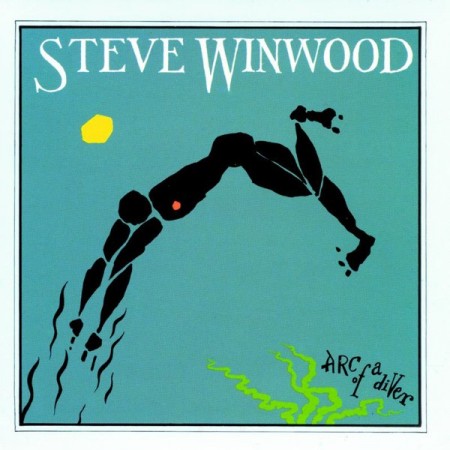
On such visits to HMV, I usually gravitate to the racks featuring bands I like and more often than not find myself comparing the prices that HMV charge and the price I paid online. That is, of course, if HMV stock these artists anyway. It may be an unsupported belief on my part, but HMV has always struck me as a bit expensive, although that said my most recent purchase from them, Steve Winwood's 1980 album, Arc Of A Diver, was no cheaper on Amazon.


But even if they have been competitive on price, HMV's business has been vulnerable for a while, thanks to a general change in our shopping habits, and a change specific to the way in which we consume HMV's two main product lines, music and video.[1] When I was in HMV in Romford just before Christmas it was noticeable that the number of shoppers queuing at the tills was much smaller than I've seen in the past; downloads and streaming have meant fewer people wanting to buy physical media, and those who do increasingly buy it online.

In the wake of the news about HMV, Guardian journalist Penny Anderson wrote a piece about the chain's demise and why we don't need them any more (Thank you for the music, HMV, but we don’t need you any more) which I - and many others if my Twitter feed is anything to go by - found to be a rather unnecessary hatchet job on the retailer. " You wouldn’t expect to find knowledgeable advice," Anderson wrote, which was not my experience. She described HMV as " the first port of call for beginners and general music consumers," as if this was a bad thing. By definition, beginners have to start somewhere, and where better than a store like HMV that stocks a huge and diverse range of artists? And where better for your maiden aunt, or grandmother, with no understanding of your musical taste beyond the name of a band you like, and no access to online shopping, to go buy you a CD for your birthday?

Streaming and downloads have done for HMV's business what online shopping has done for others, and although I'm not a fan of streaming or downloading music - I'd much rather have a CD - I admit that I'm increasingly less likely to buy DVDs these days, preferring to stream them since I'm likely to watch films and TV programmes just once, and of course since my internet connection is now up to the task. I do occasionally download music, but only if a physical CD of the material is not available -  and sometimes it isn't. Sometimes this can be because the album in question is old or because the band have only released it in mp3 format. This latter reason is due to the fact that many of the bands I like are either not signed up to major labels and therefore release their music through companies like Bandcamp as downloads only - like The Swan Chorus - or whose CDs HMV don't stock - Lifesigns, or Doris Brendel for example - or IQ, whose back catalogue of eleven studio albums,  eight live albums and four compilations is represented at HMV by just one, the 25th anniversary remix of Ever.


The internet has made the world a radically different place to what it was when I first started buying records, and I'm grateful to have had the opportunity to browse through the racks in HMV, Virgin et al, over the years. In the future, it looks like the supermarkets are going to be one of the few options for people who want to go out and buy a CD or DVD, which will only be OK if you want something from the top twenty of either.

HMV's Bluewater store, one of the stores likely to go the same way as Harlequin Records.


One of the HMV stores likely to close is my local one in Romford, and if the list of others set to close is right, then it's possible that I'll never set foot in one of their stores again, even if the chain does survive.[2] While this is an inevitable consequence of the way the world of retail is changing, that is as much my fault as anyones.


[1] Note: I'm using video as a convenient coverall for DVD and Blu-ray, movies and TV programmes.
[2] A full list of stores that will probably close can be found here: https://www.mirror.co.uk/money/full-list-hmv-stores-risk-13785534

Friday, 23 November 2018

A Week Of Free Stuff - Mostly!

One of the perks of getting older is the opportunity to get things for free, or at least cheaper than before. I confess I have not yet had much chance to take advantage of concessionary prices - I recently made my first visit to the cinema in over twenty years and was somewhat disappointed to find that the concessionary price was the same as the normal price - but I have had a free eye test recently[1], and my 60+ Oystercard has been taking a caning recently.

Ok, so the Oystercard isn't free, but it was only £20 and expires in 2024 (when I get my Freedom Pass, assuming a future Mayor of London doesn't withdraw it) - that's six years at 27 pence per month - and it has paid for itself over and again since I got it. Take last week for instance, when I travelled up to London more times than if I had still been working! And on four of the days I travelled, the event that I was going to cost me nothing.

On the Saturday I went to see Polish prog-rock band Riverside at The Electric Ballroom in Camden. My plan was to walk from Liverpool Street to Camden - at just under four miles, that is a gentle stroll - but heavy rain put the kibosh on that idea, although popping my head above ground at Kings Cross tube, I saw that the rain had eased sufficiently to allow me to walk the last mile or so. I rather liked the venue, and as I've got older I've found myself liking venues where the audience stands rather than sits as it is easier to get to the loo during the performance, although bizarrely I find the need less when standing than sitting, which I think is psychological, not physical. Riverside were - as expected - brilliant, and support act Mechanism were better than expected.


Riverside at The Electric Ballroom
 Monday and it was off to Ealing to pick up a djembe drum that my wife had bought on eBay, and then on Tuesday it was a trip to Greenwich to the Up The Creek comedy club to see a recording of Angela Barnes' BBC radio show, You Can't Take It With You. Since the Docklands Light Railway (DLR) was extended to Lewisham, getting to Greenwich from our home north of the river has become much easier, and the DLR gives you the chance to get a driver's eye view of your journey. The show was in part a cathartic experience for Angela Barnes following her father's death, but principally just good old-fashioned observational comedy. The series is being broadcast in the New Year.


On Wednesday it was another BBC radio recording, at Old Broadcasting House (OBH) in Portland Place. Val and I go to plenty of BBC radio shows at New Broadcasting House, but this was our first visit to OBH, which is next door. The programme we went to see was World Book Club, which goes out on the World Service and in this episode featured one of our favourite writers, Lee Child, author of the Jack Reacher series, a set of books so successful that apparently one sells every fourteen seconds, worldwide with total sales exceeding 100 million. Val and I met Lee at a book signing a couple of years ago when he was promoting Night School, the 21st Reacher novel, but at World Book Club he was reading from, and speaking about, Killing Floor, which was the first in the series. The programme airs on New Year's Day.

Meeting Lee Child at Waterstone's in 2016


Thursday saw me take a trip to Wembley Stadium to see England play the USA in a friendly. I've not been to Wembley since it was rebuilt in 2007, in fact the last time I was there - as far as I recall - was for a Genesis concert in 1987. I used to go to Wembley for England games regularly until an uncomfortable experience at a match against the Republic of Ireland put me off. I probably wouldn't have gone to this game had it not been for my football club, Romford FC, being given a number of complementary tickets. Had the Football Association known in advance that Wayne Rooney would be brought out of retirement for a swan-song appearance, I wonder if they would have been so generous in handing out freebies; before Rooney's inclusion in the squad was announced they probably felt it prudent to 'paper' the stadium to avoid row upon row of empty seats. The new stadium is impressive, safe, modern and clean - which the old one wasn't - but it lacks the charm that the old arena had; it's a bit bland. My ticket warned that tier five - where I was seated - was not suitable for vertigo suffers due to the height and steep aspect; fortunately, this warning turned out to be a bit overdone, as, despite my aversion to heights, I had no issues. One thing that has not changed since Wembley was rebuilt, however, is the time it takes to get back to Wembley Park tube station. If I were a regular visitor, I would definitely be looking at alternative means of getting home.


The final freebie of the week was another BBC radio programme, of The Now Show this time, which was recorded on Friday lunchtime at The Comedy Store in Leicester Square, and which was broadcast that same evening, but is still available to listen to on the BBC Radio iPlayer.


Gary Numan at The Royal Albert Hall

My 60+ Oystercard probably saved me about £60 in fares that week - and continues to save me money, as Val and I were at The Royal Albert Hall to see Gary Numan this week - and of the shows and events we've been to this last week and a bit only that show and the Riverside gig cost me money. A caveat I'd add is that of course even the free shows involved some expenditure (food, drinks, a programme at the football, and t-shirts at the gigs - I'm a sucker for tour t-shirts), but if nothing else this week or so has once again proven, having seen three shows and a football match that cost me nothing, it's possible to travel around the capital and be entertained for free, or at least pretty damn close to free.


[1] Not much of a concession, as it seems most opticians offer free eye tests with vouchers in newspapers, or to anyone who buys a pair of glasses from them.

Friday, 2 November 2018

The Theory and Practice of Boredom

"Mum, I'm bored!" How many times did  I utter those words as a child? How many times during the long summer holidays, or on Sunday afternoons when the weather prevented me from having a kick-about in the garden, and there was nothing on TV worth watching? I have no idea, but it was often.  That sort of generalised boredom - as opposed to specific boredom, which we'll come to shortly - ought to be far less common today, both among adults and children. In my youth there were fewer diversions, today, what with a multitude of TV channels, streaming services, video games, and social media, there are far fewer reasons to be bored; frankly, one ought to always be able to find something to do (and I'm discounting household chores and the like).

Specific boredom is another thing altogether. Being bored by one's job is something that has to be endured; being bored by a particular TV programme, or by some hobby or another can be dealt with by switching to some more engaging activity. Work - boring or not - has to be tolerated. Many times in my working life I had to do tedious, repetitive jobs, the sorts that are alright for the first few hours - the whole morning sometimes - but become stupefying after a while. I spent a long time checking payments - comparing written instructions with what had been input into the computer system - which was a task that after a while became so mind-numbing, that as the day progressed, trips to the coffee machine became increasingly regular, just as a means of getting away from the desk.

Boredom at work can be detrimental to performance; mistakes start creeping in. I recall vividly spending hours checking payments and at some point having no recollection of the last few items I had checked. Clearly, then was a good time to take a break. That was at least one reason why I always enjoyed jobs with plenty of variety, less opportunity to lose concentration and make an error. Sometimes, of course, a repetitive task, performed over and over again, can enable the mind to wander without any unfortunate consequence.

Generalised boredom - which, as I've said is something we all probably experience less these days - need not actually be a bad thing, although perhaps it is better to characterise this form of boredom as something else, by which I mean freeing the mind to simply wander, to daydream. We all lead increasingly busy lives, whether it is work or running a house, keeping up with our social lives - in real life or online - being busy, being engaged, we seem to be constantly on the go, our minds ever active.

The poet W H Davies, wrote:
What is this life if, full of care,
We have no time to stand and stare.
No time to stand beneath the boughs
And stare as long as sheep or cows.
No time to see, when woods we pass,
Where squirrels hide their nuts in grass.
No time to see, in broad daylight,
Streams full of stars, like skies at night.
No time to turn at Beauty's glance,
And watch her feet, how they can dance.
No time to wait till her mouth can
Enrich that smile her eyes began.
A poor life this if, full of care,
We have no time to stand and stare.

This poem is an encouragement to do nothing, to let the mind wander, to think not of something specific, but simply to pause and reflect. Doing so will often allow me to reach insights, solve problems, and be creative, without actively realising it. One thing I love to do is go for walks, preferably somewhere away from the hustle and bustle of the city, but even there walking frees my mind to take flights of fancy. One thing that eliminating boredom does is similarly reduce our capacity to daydream; walking allows me to do just that, and apart from the benefit of the physical exercise, allows my mind to order my thoughts and make decisions, or solve problems, even if I am not conscious of my doing so.

Most of us will have experienced the frustration of not being able to solve that last clue in the crossword, or of desperately trying to remember someone's name, only to find that the harder we think about it, the more elusive the answer becomes. Yet, by switching off that part of the brain, letting the mind wander, the answer will pop into one's head unbidden.  Many times during my years at work I would be faced with a problem that needed solving, and many times the harder I thought about that problem, the more difficult it became to pin down an answer, yet the solution to many of those problems came to me when I was not actively thinking about them, when I was walking to work from the station, or waiting for a train. The solutions came to me when I simply stood and stared.

To counter the stress we all encounter in our daily lives, many people are turning to mindfulness and meditation, which are not necessarily the same thing as submitting to the sort of generalised boredom that I have described, however generalised boredom, or allowing oneself the freedom to simply stand and stare works for me. A danger of this, and a trap that I find myself falling into is overthinking, but that stems from my actively thinking about something rather than engaging in the sort of freewheeling daydreaming that characterises what, for want of a better term, I'm going to continue calling generalised boredom. And overthinking is only one step removed from full-scale worrying, and we don't want to go there!


As a child, I hated being bored (I'm sure my Mum hated it too), but now I enjoy it and I embrace it; I have some of my best ideas when I'm bored. Taking the time to relish being bored enables one to daydream, to imagine, to be creative. Without boredom, our lives are poorer.

Thursday, 18 October 2018

Task Manager Is Not Responding

Built-in - or planned - obsolescence has been with us since the 1920's; it first took root in the car manufacturing industry in the United States at General Motors, where annual design changes were introduced to convince consumers of the need to buy a new model each year. The idea grew through the 1930's as a means of stimulating a depressed economy, but really took hold in the 1950's, being popularised by an American industrial designer by the name of Brooks Stevens, who defined planned obsolescence as, "Instilling in the buyer the desire to own something a little newer, a little better, a little sooner than is necessary."

Brooks Stevens, 1911-1995. Picture: Industrial Designers Society of America


While planned obsolescence is still a feature of the automobile industry - I for one regularly receive emails, texts and phone calls from the dealership I bought my current car from, encouraging me to trade it in for a newer vehicle  - today there is barely anything that we buy that we are not encouraged to replace almost immediately with an upgraded model. Apple launch new iPhones seemingly every month, although in reality it's annually (except for the last three years when there have been - or will be in the case of 2018 - two). And immediately they launch a new device, they sew dissatisfaction among owners of older iPhones, even though those models may be just a year old and the difference between them and the newly launched product is minimal. But the mobile phone industry expects us to upgrade our handsets every two years, hence most contracts run for 24 months, but if you are not upgrading your phone after that time, it still makes sense to change your contract to SIM only to avoid continuing to pay for the handset, which your monthly payments will have made yours after that time; unless you bought it outright in the first place, of course.

Sadly, after two years most people are faced with having to change their handset anyway as degraded battery life means it spends more time plugged into the wall socket than being truly mobile, or the apps you use most often stop working without being upgraded, except you can't upgrade the apps without upgrading the operating system, which you can't upgrade because there is insufficient memory on the handset. Or in slightly sinister fashion, the release of a new model coincides with an abrupt falling off of performance of your handset, prompting much frustration and a burning desire to upgrade.


I've had my current mobile phone - a Samsung Galaxy S7 - for two years now, and have gone SIM only, which is not only cheaper but gives me more data too, and since Android updated the operating system, the phone's battery life seems to have improved by about fifty-percent, which seems counterintuitive but there again, it is Android, not Apple.

With newer phones seeming to have only marginally better functionality, it really is only battery life that would make me want to get a new handset at present, but the same cannot be said for my laptop. I am writing this on a Lenovo machine, which I have had since 2013. When I first bought it, I was quite impressed with it, particularly in comparison with our old desktop computer, but now, not so much. I don't ask much of my laptop, I only really use it for Word, Excel, email and web browsing; all I ask is that it is reliable and responsive. I don't even store much on it, my files and pictures are stored on a flash drive, which I periodically back up to an external hard drive. I don't use it for anything that really ought to impair its performance, yet as it gets older, it gets more and more sluggish and unresponsive.

The Lenovo G580


Surfing the net can be a frustrating experience when pages are slow to load,  and then it's tempting to blame one's internet connection, except the same pages that load at a snail's pace on the laptop seem perfectly normal on other devices we own that use the same connection. Mind you, as this tweet from James Gleave illustrates, there are plenty of annoyances that have nothing to do with either one's machine or connection.


Actually, it is programmes not responding that has become my biggest bugbear. All too often, clicking to open a programme like Word or Excel, or File Explorer is met with the computer equivalent of dumb insolence. Click once; nothing. Click again; still nothing. Click a third time (yes, I know, I should be patient); still nothing. Lose patience and try to invoke Task Manager with Alt+Ctrl+Del; nothing. And then, with what in a human would be excessively bad grace and a smug expression, three instances of the programme open. Meanwhile, where is Task Manager? Nowhere to be seen, that's where. Excel frustrates me with its simple stubbornness to do things in a timely manner. For instance, if I want to format a cell or range of cells, right-clicking and selecting Format Cells inevitably results in that annoying little blue spinning circle appearing and the words 'Not Responding' mocking you from the top of the screen. Then, miraculously, just as you give up hope, the dialog box appears. It happens every time, and it's very, very annoying.


As for Task Manager, that supposedly indispensable tool for closing recalcitrant programmes, it is frankly even more frustrating than the programmes it is there to help you with. Alt+Ctrl+Del eventually calls up a sky-blue screen; 'Preparing Security Options,' it says before grudgingly offering a list of options, one of which is Task Manager, but which invariably opens with the caveat, 'Not Responding.' This to me is the final indignity; Task Manager is supposed to be a help, not a hindrance. More often than not, by the time Task Manager has deigned to make an appearance, the unruly application has started to behave itself...for the time being.

Wait for it...

...finally!


Given my frustration with my laptop, I started Googling the expected lifespan of a laptop. Apparently, assuming no physical damage occurs (like lobbing it out of the window in frustration when Word refuses to open), a mid-range laptop like mine should last three to five years, so on that basis, I have reached the end of this machine's useful existence. But why? As I say, I'm only using it for quite simple and straightforward tasks, I haven't installed any power or memory hungry applications and all I really ask is for it to be reliable and responsive. Five years seems a pitiful amount of time, but I guess we're entering the realms of planned obsolescence here.

I'd prefer not to go to the expense of buying a new machine, especially since these days Microsoft Office - which is pretty much essential - now has to be bought separately, so more cost there, and anyway, I'm happy with the 2007 version I am using. It's taken me enough time to navigate around that, without having to learn how to use the latest incarnation. Eventually, I suppose I'll have to bite the bullet, but in the meantime put up with this increasingly petulant machine.

Postscript: Since I wrote this, the laptop seems to have bucked its ideas up. Whether this is coincidence (perhaps it has read my words and decided to behave better for fear of being junked), or the update for Windows 10, version 1803, I cannot say, but I'm keeping my eye on it; any backsliding and I'm off to PC World.


Thursday, 13 September 2018

Without You

"Without fans who pay at the turnstile, football is nothing" - Jock Stein

Jock Stein. Picture: The Scottish Sun
The lower down the football pyramid one descends, the more important the fans become. They may be fewer in number than in the Premier League, but they are no less passionate. They may not have to spend quite as much of their disposable income to watch their team in action, but they tend to be more generous - voluntarily - both with their time and their money when they do. The Premier League fan has pretty much a one-way relationship with the club they support; in non-League football fans and clubs are much more connected. The Premier League clubs can recruit and employ professional administrators, the non-League clubs rely on fans to volunteer for the vital jobs that keep the clubs ticking over. In short, without fans, football is nothing.

Conversely, the higher up the football pyramid one climbs, the less important the fans become, or so it seems. In fact, it has reached the point where a BBC study has revealed that during the 2016-17 season, half of the clubs in the Premier League would have turned a profit even if they had played all of their home games in empty stadiums. For those clubs, the fans could truly be said to be irrelevant, thanks to the huge amounts of revenue generated by television. Dr Rob Wilson, a sports finance specialist at Sheffield Hallam University, told the BBC "From a revenue generation perspective, clubs do not rely anymore on matchday ticket income."

When you read things like that the frequent complaints from fans about matches being scheduled at inconvenient time - or rescheduled at short notice after they have made their travel arrangements and in some cases booked hotels and time off work - are thrown into perspective: Given a choice between looking after their fans or satisfying the broadcasters, the clubs inevitably choose to please their paymasters. From a business point of view, it makes perfect sense, not that it will placate the angry fan of a club whose game that was originally on Saturday at three is now on Monday at eight, and two-hundred and fifty miles away to boot. Just this week, Manchester United supporters have complained - justifiably - about the decision to put back their game against Everton from its original Saturday lunch-time slot to the Sunday afternoon, solely due to the demands of television. Apart from getting their grievance off their chest, it is unlikely to achieve anything.

Then: The first Match of The Day in 1964 featured Liverpool and Arsenal, with highlights after 10pm
Now: Stream live games; why bother going to the ground?

Television's relationship with football has changed beyond all recognition during my lifetime, and the last quarter of a century has seen the most profound and far-reaching of those changes thanks to Sky TV. Football became a regular part of TV's programming in 1964 when the BBC launched Match of The Day, but not everyone was happy with the idea. 

Bob Lord, chairman of Burnley FC from 1955 until his death in 1981. Picture: Northern Life magazine.

When Match of The Day began, Burnley chairman Bob Lord - a man for whom the word irascible might have been invented - banned the BBC's cameras from Turf Moor for five years, and he also convinced the chairman of his fellow Football League clubs to adopt the concept of the three o'clock blackout. That blackout prohibits the broadcast of any matches between 2.45pm and 5.15pm on a Saturday afternoon. It is a principle that even Uefa have adopted, with Article 48 of their regulations allowing national football associations to specify a two-and-a-half hour period on a Saturday or Sunday when no live games may be broadcast on their national TV networks. And it has worked fine until recently, but a challenge was issued by the Football League during last weekend's international break. 


Last season the Football League launched iFollow, a subscription channel that allows anyone outside the UK to watch Football League games live on Saturday afternoon for a fee of £110 per season. This season the channel has been made available to fans in England and Ireland, but only so they could watch games played outside the 2.45 to 5.15 blackout, however that changed last weekend. On Saturday 8th September the Football League broadcast all of the games that kicked off at three o'clock in Leagues One and Two through iFollow, much to the dismay of Accrington Stanley chairman Andy Holt, who claims that no discussion of this took place at the Football League's AGM, and that the broadcast exceptions were not made clear to clubs.

Andy Holt. Picture: Manchester Evening News

Generally, fans are opposed to the idea of games being broadcast at three on a Saturday afternoon, with nearly 73% of eight and a half thousand supporters who completed the Football Supporters' Federation's 2017 survey opposing the removal of the blackout, but we know that fans are increasingly becoming marginalised in the considerations of clubs in the Premier League and the Football League. The Football League's decision to view the international break as an exception and to allow games to be broadcast on Saturday afternoon - and the Football Association's decision not to stop them - is contrary to the spirit of Uefa's Article 48, if not the letter.  It also looks ominously like the thin end of the wedge. Be prepared for the Football League to trumpet the success of the broadcast and to announce further 'exceptions' to the blackout rule. And if the Football League's iFollow channel proves successful, can the day be very far away when the Premier League clubs recognise the money-making potential of live-streaming games on a Saturday afternoon that are currently not broadcast under the existing agreements with Sky and BT Sport, regardless of the blackout?

English football's blackout dates, with international weekends now excepted.


If clubs in the Premier League can turn a profit without you, they will do so. If they can make even more money by broadcasting games during the blackout, they will do so, and if Manchester United v Liverpool is live on TV at three o'clock, it would be naive not to expect the uncommitted or the casual supporters of many clubs to skip watching their local club in favour of seeing the big guns. The Premier League clubs will be well insulated from loss if televised football at three on a Saturday afternoon becomes the norm, whatever platform it is on, be it iFollow, or Sky, after all some of them don't even need fans at their games to make big money, but the clubs in the lower leagues, and in non-League football may well suffer as gates dip when there is a live game on TV.

Somewhere in a Lancashire cemetery, Bob Lord is spinning in his grave.


How England Were Nearly Denied The 1966 World Cup

In 2017, during the bidding process to determine who would host the 2026 World Cup, FIFA President Gianni Infantino addressed the travel ba...