Thursday, 6 September 2018

"As per my email..."

Anyone born since about 1990 will have little idea what life without email was like, and for most of us - regardless of when we were born -life without email now would be hard to contemplate. Both in business and in our private lives, email has gone from novelty, to useful, to pretty much indispensable. For most people working in an office environment, an email account is a necessity, and in our private lives, online activities such as shopping or maintaining a social media presence would be nigh-on impossible without one. Yet as recently as the late 1990's, an email account in the workplace was a privilege rather than a right or necessity, and I remember having to put forward a strong business case to be granted one by my employer, and had to be even more insistent that it allowed me to send and receive external emails rather than just within the company.

Remember the days when accessing your emails meant starting with a menu that looked like this?

Because of the era in which I started work, and because of the organisation I worked for, my letter writing has always been rather formal in nature; it was not just the norm, it was expected, and use of vernacular would be discouraged, or removed from letters that went for signature by a manager. As a result, I carried that style forward into my email writing, so that my messages would be peppered with expressions like, "As per our telephone conversation," and "I should be grateful if you would," or "Many thanks in anticipation of your prompt reply." I find myself still using this sort of language when writing emails, usually to the Customer Service departments of various organisations, and especially if I am making a complaint. 

My email writing style would probably fall foul of the participants of a recent survey conducted by software company Adobe, who found that the most annoying phrase used in emails is, "Not sure if you saw my last email," closely followed by "Per my last email," with "Per our conversation," and "As discussed" also featuring prominently. Since three of those appear in a great many of the emails that I compose, I figure that I would be seen as somewhere between quite irritating and very annoying.

The most annoying phrases used in emails, as per the tardy, inefficient, and work-shy.

 
One thing that the apparently annoying phrases have in common it seems is the fact that they are most likely to be used in an email that is sent by someone who has not received a reply to a previous message. In that case, the recipient has less cause to be annoyed than the sender, as in my opinion, the most annoying thing about emails and email users is the inability that some people have to respond to straightforward requests. While email has made our ability to communicate so much easier, it has also made us less effective in doing so. When I think back to the various roles that I had in my career, one thing that strikes me is how much more correspondence I received with email compared with the amount I got before. Before email - and regardless of what job I was doing in the organisation I worked for - I would come back to work after a fortnight's holiday and be faced with a couple of memos or letters that were for me to deal with personally, a couple of bits of work that my stand-in had not had time to complete, and perhaps a couple of phone messages. By the time I left the bank in 2012, I would be faced with somewhere approaching 400 unread emails in my inbox when I returned to the office after a couple of weeks off. As a result, I would probably spend most of my first day back sorting out the wheat from the chaff, filing or deleting the superfluous and the duplicates, paring that 400 down to the fifty or so that actually needed some sort of action.

Some people's inboxes would look like this if translated into actual bits of paper.

Plenty of people that I worked with seemed incapable of keeping on top of their inbox, however. There were people whose screen you would see with their email a sea of red, with something like 'Inbox (655)' appearing prominently. Of course, if you know anyone like that, it is pretty pointless sending them an email in the first place, let alone a chaser.


But if you do need to chase someone, how to do it? Certainly, the respondents to Adobe's survey seem more upset that you, the sender, have had the temerity to chase them than they are about the fact that they haven't responded to you. If "Not sure if you saw my last email," and "Per my last email" are frowned upon, how do you address the matter of non-response? William Hanson, etiquette expert and author of The Bluffer's Guide To Etiquette, suggests that the writer makes it look as though their own email is at fault (yes, really). He proposes that one writes, "I don't think you got my last email as my email server has been having a bit of a meltdown."  A mealy-mouthed "Not sure if you saw my last email," is too much of a cop-out without straight up lying and shifting the blame and responsibility away from the person who is actually at fault, i.e. the recipient, and placing it squarely on one's own shoulders - and that of your IT department or email provider. The thinking behind this is that it gives the person who has not responded, an 'out' as Hanson describes it. This is frankly, nonsense and is presumably driven by the desire not to upset the person you are writing to, or to put it more bluntly,  accept their tardiness and inefficiency.


 If I send you an email and you don't respond within what I think is a reasonable period of time, be prepared to receive one that starts, "I refer to my email of (date) regarding (insert subject matter). To date I am unable to trace a reply from you and shall therefore be grateful if you will acknowledge receipt of this message and respond to my enquiry as soon as possible, and by (insert date) at the latest." Now you may think that somewhat formal - pompous even - but I am unapologetic. I am not going to let you off the hook for not replying, nor will I accept responsibility for it, and while I understand that sometimes a full, comprehensive response can take some time, an acknowledgement takes seconds and keeps me off your back until such time as you can give me a complete response. This is especially true these days when email clients, particularly on mobile devices, have pre-formatted replies and acknowledgements that can be sent with just a couple of taps of the screen.

If I receive an email that includes one of these phrases, I am more annoyed about the fact that someone has had cause to send it to me than I am about the phrase itself, which after all is merely a way of introducing the core of the message. For my money, Adobe's survey is more damning of the people who are receiving these messages than it is of the people who are sending them.


Thursday, 30 August 2018

I Had A Dream

I had a dream about Jeremy Corbyn last night. Well, I think it was Jeremy Corbyn, it could have been Keith Allen, to whom he bears a passing resemblance. On balance, though I think it was JC, since in return for my borrowing his Kindle (yes, really), he treated me to a lecture on Labour Party policy, not that I can remember any of it, although I do know that it went on  long enough for me to miss my bus. Dreams are weird, aren't they?


The leader of Her Majesty's Most Loyal Opposition, and an actor/comedian.

Why did I dream about Jeremy Corbyn? It could have been a surfeit of cheese too close to bed-time, but more likely because he is rarely out of the news. In fact, if you are like me and glean most of your news from Apple's News aggregator, you would believe that Corbyn is one of only a handful of newsworthy politicians on the planet, the others being Donald Trump (inevitably), Boris Johnson, and the late John McCain, with Theresa May, Emmanuel Macron, and Justin Trudeau trailing in their wake.

Rarely out of the news, regularly decrying it.

On the face of it, Jeremy Corbyn and Donald Trump have little in common; their politics are, after all, poles apart (no pun intended), but one thing they share is a fragile relationship with the press, or more specifically, the so-called Mainstream Media (MSM). Donald Trump regularly rails against what he calls 'Fake news,' i.e. anything published or broadcast that either criticises him or does not share his worldview, while Jeremy Corbyn has recently acquitted himself less than impressively by displaying no little contempt in front of the cameras on a couple of occasions. Questioned about his involvement in a wreath laying at a Palestinian Martyrs Cemetery in 2014, Mr Corbyn rolled his eyes and sighed in exasperation at the interviewer's temerity in asking a question of significant interest to the public. Then, when asked by Channel 4 news if he honestly thought that the UK was better off outside the European Union, he responded no less than six times with evasive answers. And let's not even get started on the furore about allegations of anti-Semitism in the Labour Party.

"I'm not rolling my eyes! Have you seen that cobweb up there?"

If I give the impression of singling out Jeremy Corbyn for dissembling and providing disingenuous answers, it is only to illustrate a universal truth about politicians, that they only want to give answers to questions they wished they had been asked, not the more difficult ones that interviewers throw their way. An exception, of course, is Fox News who in interviewing Donald Trump lob him a few easy balls that he proceeds to attempt to knock into the next parish, albeit that he sometimes comes close to failing even with these dolly-drops.

One of the reasons that Mr Corbyn featured in my nocturnal subconscious may have been thanks to a speech that he gave last week at the Edinburgh Television Festival in which he raised some interesting, but ultimately worrying points. To a large degree I go along with his idea that the BBC's licence fee needs reviewing, although I'd take issue with his view that in part this needs to be done to reduce the cost of the licence fee to poorer households. A year's TV licence is £150.50; the cheapest Sky package is about £480 per annum - to which many families who fall in the category of poorer households subscribe - and that is before additional services like Netflix, Amazon Prime, and the like are factored in. If the BBC loses its ability to raise funds through the licence and does not take on advertising, then revenue generation is probably going to come in the form of subscriptions or Pay-Per-View, rather than Mr Corbyn's proposal that 'tech giants and Internet Service Providers' pay a digital licence fee. Such a fee may be difficult to implement or would be passed on to customers in the event that it was introduced. None the more for that, Corbyn is right to raise the matter; licence fee reform is long overdue, and while his proposals may not fly, they will at least spark debate.

The TV Licence; an anachronism these days?


Mr Corbyn's speech included a Trump-like criticism of the press and came with a proposal that journalists be given the right to elect their editors once newspaper or broadcaster becomes “particularly large or influential," which I guess would encompass most of the current British press even now. It exposes a typical politician's support for a free press, which exists only as long as the free press is being nice to them and not asking awkward questions.

The digital information age we find ourselves in today has changed the way we consume news irrevocably. There is little that I have read lately that sums this up better than an article on The Conversation website written by Doug Specht of the University of Westminster [1]. "In the “old” media landscape of even just a few years ago, Specht writes, the public was able to collectively develop ways of identifying bias and distinguish truth from lies and propaganda. But today that’s much harder – not just because of the volume of information, but also because algorithmic curation makes it increasingly difficult for laypeople to develop strategies that successfully identify bias."  He goes on to say, "While a certain amount of scepticism is useful when deciding what sources to trust, the level of ambivalence, distrust and cynicism on display today is something else. Thanks to the sheer volume of information with which users are now inundated, compounded by skewed algorithms and bellicose Trumpian rhetoric railing against fake news, readers and viewers are increasingly unable to discern that which demands scepticism from that which doesn’t. The net result is a terminal sense of ambivalence."

Ambivalence is most certainly something that I feel on reading the news these days (along with cynicism and distrust). You know how it goes, a newspaper or website reports something uncomplimentary about someone - usually a politician, often POTUS45 - they decry it as fake news, and then they or their cronies come out with some rebuttal that contains as many, if not more, inaccuracies, unsubstantiated statements and even downright falsehoods as the original statement they were complaining about. Donald Trump has gone so far as to claim that Google is showing only fake news stories about him. When politicians complain that the free-press is giving them a hard time,  we surely are only a step or two from them deciding that state intervention in guiding the news agenda is a desirable goal.


Perhaps Mr Trump, who once claimed that he could call up Bill Gates to help him shut off the internet to curb radical extremism, should get together with Mr Corbyn, who in his recent Edinburgh speech floated the idea of a publicly owned social media platform to rival Facebook. The free-press, so called because it is free of government influence and control, may be in the hands of 'unaccountable billionaires,' and may not report on politicians in the way they would like, but how much more damaging would state-controlled media, in which I include internet companies and social media, be? Facebook may have faced scandals recently over the harvesting of personal information by Cambridge Analytica, and we may reasonably have concerns over what data the social media giant has on us and how they use it, but how much scarier would it be if our social media accounts were state-run, state-controlled? How much more likely would data be lost, compromised or misused?


Graphic: bestdroidplayer.com


On reflection, we would probably have nothing to fear. Given the track record of successive British governments in large IT projects,  a state-run equivalent of Facebook would be so awful that no one would use it, and if they did, it would probably crash immediately and never recover.


Friday, 17 August 2018

The Freedom To Choose

As at October 2017, 85% of the UK population had a smartphone;[1] bog standard mobiles are passé, and feature phones are in many ways a pointless compromise between the devices that can only call and text and those that have all the bells and whistles, but the smartphone juggernaut trundles on. The smartphone is now so fully integrated into the lives of millions of people that if they were suddenly removed, or simply unusable for any reason, it's difficult to see how many people could actually function. And our reliance on them, both from a practical point of view and from an addictive perspective, is increasing. The flip-side of that is a marginalisation of groups within the population who, for whatever reason, do not embrace the smartphone and its various uses.


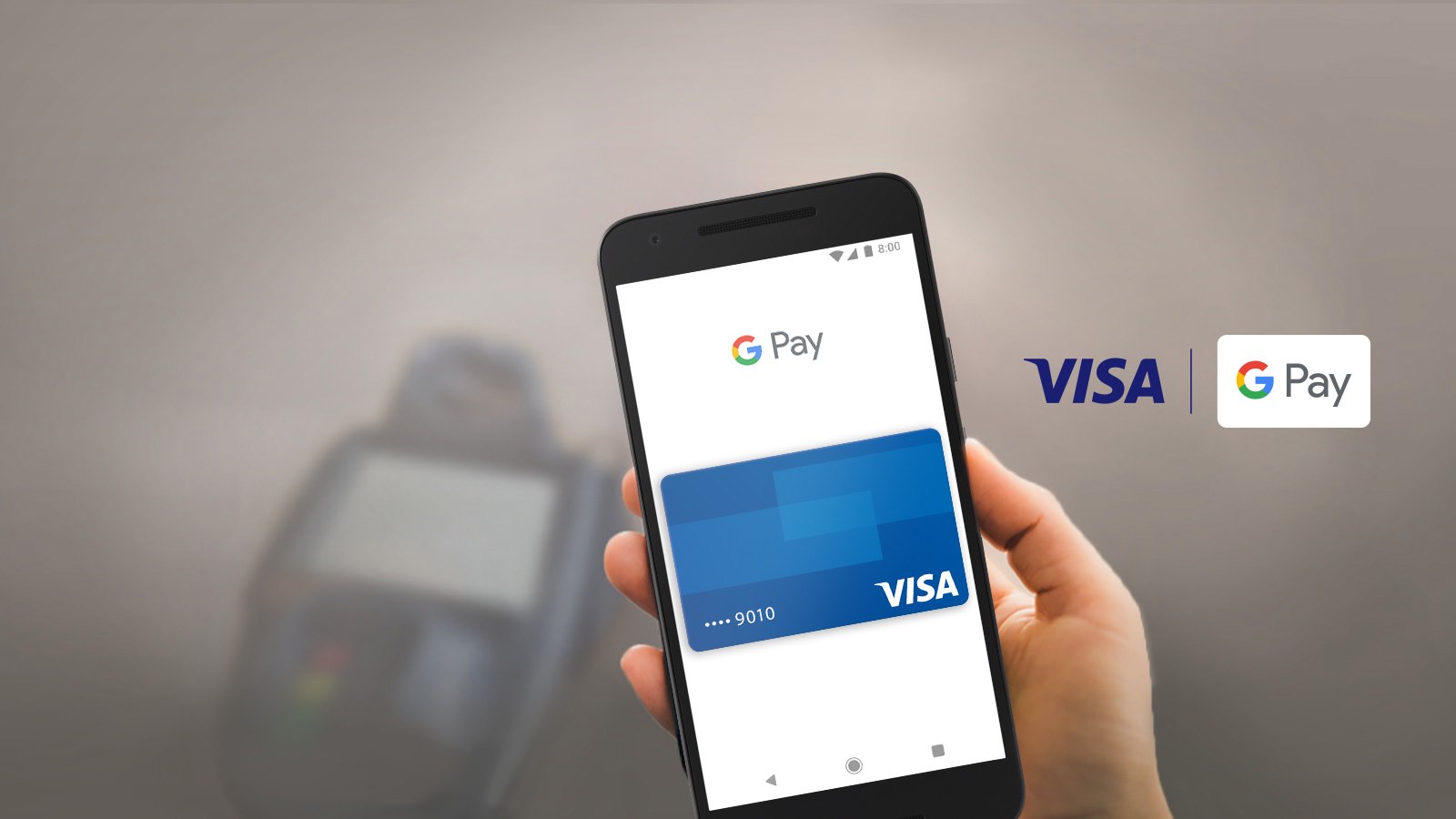
The majority of people under the age of twenty-five - the generation that has not known a world without mobile phones -  are comfortable with the increasing number and variety of uses for their smartphones, whether it is messaging, social media, navigation, payments, or games, their phones are their world and mobile phone dependence is now accepted as being as real as a substance addiction.[2]  Contrarily, one of the things that they use them for less and less is making phone calls. This addiction is fed by the number of new ways in which smartphones are being enabled to perform everyday functions, provide solutions to problems we didn't know we had, and generally replace the means by which we have traditionally performed those everyday functions in the past. Want to pay for your coffee? Use Starbucks' app (or Costa's or Caffe Nero's, depending on your coffee shop of choice). Travel on the tube, or the bus? Use TfL's Oyster Card app to pay your fare. Popping into Tesco for some groceries? Pay with one of the payment apps like Apple Pay, or Google Pay. Then there are the car parking apps; increasingly car parks are offering pay by smartphone options through apps like RingGo and here is one area in which the future may come with some frustrations.


I downloaded the RingGo app after entering a car park where paying by cash was not possible. Living in London I have been long familiar with the fact that if you want to travel by bus, then cash is no longer king and it's an Oyster or contactless payment card or nothing, but my visit to one car park recently offered me the option to pay for my parking by phone only. Vending or parking machines that do not accept cash, but do accept cards, are one thing, but no machines at all means that to pay for parking it is phone and pay, or use the app. So I downloaded the app, and in fairness I have no complaints - in fact it's almost faultless - except for the lack of choice; without a mobile phone of some kind it is not possible to pay to park, and this increasingly has to be an area of concern for people who would prefer not to use their phone for that purpose, don't have a phone capable of the task, or simply don't have a phone at all, although that last group is shrinking every day.

In the name of progress, and conceivably in the name of convenience, more and more functions are migrating to our phones, which is fair enough, so long as alternatives that do not require a smartphone continue to be offered, which is where I have an issue. Don't get me wrong, I have no problem in embracing many of these apps; I habitually use coffee shop apps to pay for food and drinks, I use Google Pay more than any other payment method these days (I can go the best part of a week sometimes without paying cash for anything), I use the RingGo app in car parks that offer it, and of course I use my phone for browsing retailer's websites and buying stuff online. But - and here's the nub of the matter - I like to have a choice, and increasingly our choices are being taken away from us - slowly, perhaps, but being taken away nonetheless.


More and more companies, and more and more local authorities and utility companies are becoming like secret societies. Look at any number of websites and click on the Contact Us link and one thing that is either missing or nigh on impossible to find is a telephone number. Amazon's website doesn't even have a 'Contact Us' option, preferring instead to bury any contact details behind a whole series of pages and innumerable clicks that eventually offer the promise of being able to contact them by phone, but don't provide a number to dial. From experience, the best way to find a phone number for most companies is to ignore their website and just Google it.

Spot (or not) the Contact Us link in Amazon's website.


One of my hobbies is watching my team, Romford FC, play football, and when I go to a game I like to get a programme. There has been a trend in recent years for clubs to move away from the traditional programme towards digital offerings; some clubs, like Barnet FC in the Vanarama National League, Cheshunt FC in the Bostik League, and Hashtag United of the Eastern Counties League Division One publish online programmes only, so no paper programmes at all.[3] With increasing print costs, this move is understandable, but for many people, there is little or no appeal in reading a programme on their phone, and if you don't have a smartphone, or can't get a signal, you'll not be able to read the programme where most people read them, at the ground. And speaking of Hashtag United, when Romford played them in a friendly recently, one of their followers had no cash with them and expected to be able to pay to get into the ground using a card, so just as some people may be excluded from certain services by their inability to access them using a smartphone, so some people may be excluded for exactly the opposite reason, having embraced technology so completely that they have no 'old-fashioned' alternatives.

The online only programme...

...personally, I prefer the old-fashioned paper variety.
Amazon, Tesco, and Sainsbury's are all trialling stores where the customer uses their phone to scan and pay for their purchases[4] and till-free stores are clearly considered to be the way forward by many large retailers. I am happy to use the self-service tills that are to be found in many stores and use contactless or mobile payment methods to pay, and it's probable that when they are more widespread, I'll use the till-less stores too. But, I like to have the choice not to use my phone, I like to be able to buy a physical programme at a football ground, I like to go to a till and interact with a human being to exchange my cash for their goods and services. In a nutshell, I like choice. Progress is good, change is good, but freedom of choice is better.

Friday, 10 August 2018

Deal, or No Deal?


Comparisons have been made recently between the Millennium (Y2K) bug and Brexit.  Tory MP Sir Bernard Jenkin recently told BBC Radio 4's Today programme: "We will look back and wonder what all the fuss (about Brexit) was about - a bit like the millennium bug, remember all the experts on the millennium bug?" Ah yes, experts, let us not rely on experts if their view does not match with ours; as Michael Gove said, “people in this country have had enough of experts”.


Sir Bernard Jenkins, whose comparison of Brexit and the millennium bug is somewhat wide of the mark.

There undoubtedly are similarities between Y2K and Brexit: In 1999 there were dire warnings of food shortages, the health service in meltdown and planes falling out of the sky. Now, with the United Kingdom set to leave the European Union in March 2019 there are similar predictions, except this time the planes won't be falling out of the sky because they won't be allowed off the ground. There is one major difference between the approach to the dawn of the new millennium and the prospect of the UK outside the EU, and that is as the year 2000 approached, thousands of people in companies large and small, and in government, were working tirelessly to make sure that all of the computer systems, all of the code, and all of the infrastructure was Y2K compliant. I was one of them, and I put in hundreds of hours making sure that the systems within HSBC that I worked on would not collapse in a heap as the date rolled over.


Doom-laden prophesies ahead of 1st January 2000 did not come to pass thanks to
diligent and thorough testing, not through some stroke of luck or because there was no threat.

In contrast, preparations for Brexit can best be described as chaotic. No one knows for sure exactly what this country will be like once it has disentangled itself from the EU; one thing is for sure, things will be different, but how different and how that is dealt with requires clarity of purpose, clear planning and policies, practices and processes being in place to mitigate the risks inherent in what is essentially a step into the unknown. And at present, I feel we should all be more than a little concerned that precious few of these seem to have been talked about, far less made ready for March 2019.


Danny Dyer proved an unlikely sage of Brexit when he said, “Who knows about Brexit? No one has got a f*****g clue what Brexit is.”

Article 50 - the invoking of which starts the process by which a member state may leave the EU -  states that the Union shall negotiate and conclude an agreement with that State, setting out the arrangements for its withdrawal, taking account of the framework for its future relationship with the Union. This is done in accordance with Article 218, however the issue with these articles is their utter vagueness, and it is vagueness that has marked the UK Government's negotiations with the EU, while there is similar vagueness within Theresa May's government. Frankly, the process by which one disentangles oneself from a mobile phone contract or gym membership is better written and more water-tight than the one for leaving the EU, although I believe there's a reason for that. It has been said that Article 50 was drafted merely to address the absence in the EU's articles of any procedure that catered for a member state leaving, but that in their arrogance the EU never seriously considered this as a possibility, believing that once a state became a member, they would always be fully committed to an ever closer union and that there be no need for a provision for withdrawal. Thus the vagueness of the article; withdrawal was never considered a possibility and hence the complete lack of specifics about the future state of a nation and its relationship with the EU after withdrawal.


So to a large extent, the EU is as much to blame as the UK Government for the chaos that surrounds Brexit; the EU had no idea what a deal for any country leaving it would be, so how could an individual state, how could the electorate?


Many in the Leave camp, when challenged on the basis that they did not know what they were voting for in 2016, claim that they knew exactly what they were voting for, but how could they? Even two years down the line no one knows what deal the UK will get, so how did these sages know back then? Apart from some vague claims about taking back control, or 'getting our country back' - which mostly seem to entail keeping foreigners out and changing the colour of our passports - no one has adequately explained what deal they thought the UK would get; how could they, no one knows even now.


And talking of deals, the mantra remains that 'No deal is better than a bad deal.'  I'm not sure what the proponents of that idea think it means, but to me no deal will always, in any circumstances, be worse than a bad deal; after all, if there is something that you must have, at any price, then no deal (i.e. where you don't get what you need) must be worse than a bad deal (where you do). But perhaps this is just semantics, and like Humpty Dumpty, who said "When I use a word it means just what I choose it to mean" advocates of 'no deal' mean something completely different from the accepted norm. In the same way,  the awful platitude, "Brexit means Brexit" clearly means something to everyone who utters it, even if they don't have a grasp of the specifics.


The idea of a second referendum - either on the principle of Brexit or on the final deal that is negotiated - is anathema to those who voted Leave, greeted with rebuttals such as, "What part of democracy don't you understand?" Except of course that the right to change one's mind on the basis of new information is an integral part of a democracy - if not women would still not have the vote and the 1732 Act of Parliament that prevented the export of hats  from any of the colonies (including America) -the Hat Act- would still be on the statutes. And the last two years of negotiations count as new information in my book. Another argument against a second referendum that is frequently trotted out is that any such vote would see an even greater majority in favour of leaving the EU, which in itself is the best possible reason for having a second vote; imagine Leave maintaining or increasing their majority, as their supporters believe would be the case, and opposition to Brexit would be all the weaker.

Back in 2016, in the run-up to the referendum, I was conflicted. The arguments from both sides were persuasive, even if the 'facts' being used to support them were unproven, unsubstantiated, and wildly optimistic (or pessimistic); sometimes they were quite obviously wrong, but eventually I sided with Remain, not through any great affection for the EU, but rather on the basis of 'better the devil you know,' and a gut feeling that while Gwyneth Paltrow and Chris Martin might have been able to achieve a 'conscious uncoupling,' the UK's separation from the EU would be much more acrimonious. After the result, I was prepared to accept it in the same way that I've accepted General and Local Election results that were contrary to the way I had voted, give it the benefit of the doubt and hope that a good Brexit deal could be achieved. 


Of course, there could suddenly be a breakthrough in the negotiations; the EU and the UK could agree on an amicable separation, on mutually beneficial terms, but that seems about as likely as Boris Johnson opening his mouth without inserting his foot in it, or Jeremy Corbyn being invited round for tea by the Board of Deputies of British Jews. Sadly, I think that pursuing the 'no deal is better than a bad deal' approach will leave the United Kingdom like the contestant on the game show who declines the Banker's offer and opens a box containing just one penny.

Thursday, 26 July 2018

The Shows That Never End

I have just finished binge-watching Altered Carbon on Netflix, the series based on the 2002 book of the same name by Richard Morgan. I read the book -  which won the Philip K. Dick Award for Best Novel in 2003 - shortly after it was published and loved it. I thoroughly enjoyed the TV show too, but with the passage of time, I have no idea how faithfully it matches the book, although, from a little judicious Googling to refresh my memory and answer some questions I had from watching the show, there are a few differences that I now know of - some minor, some not so.


Adapting books into TV shows or films frequently divides the fans of the originals; we must all have watched shows that differ so wildly from the books that we loved, that - original title and main character apart - they might be completely different stories. Or - and this can be just as frustrating - there are minor changes that seem to have little justification and achieve nothing more than infuriating the viewer. Sometimes we may accept these changes, or at least grudgingly recognise the necessity of them, sometimes not. And if we read the book after watching the TV show, it can be easier to simply acknowledge the differences between the screen and print versions, and while sometimes I question why they were necessary, find them less irksome.

In direct contrast to Altered Carbon, I watched the BBC adaptation of  China Miéville's The City and the City, before I read the book, and although  I could see a few differences - lead character Tyador Borlú seemed to have acquired a wife in the TV show- missing and shown in flashbacks - who was absent in the books, while one of the characters changed gender for no discernible reason - these are minor cavils. One virtue of the BBC adaptation, however, was the fact that the story was not embellished to extend to more than the four episodes that were all that were required to tell the story. Mind you, if the BBC ever get round to adapting Miéville's Perdido Street Station that might be a different story.


One of the major problems that I have - and I know many people feel this way - when watching a TV adaptation of a book is that all too often the characters I have imagined do not match the actor who plays them. Recently, the best example of this was in the TV version of Stephen King's 11.22.63, where I could not for the life of me have any empathy with the character of Jake Epping/James Amberson as played by James Franco, a much less sympathetic version of the character from the novel.


I couldn't warm to James Franco in the lead role of the TV version of Stephen King's best-seller

But, as tiresome as the issues of seemingly inexplicable plot changes or of actors who seem out of kilter with the part may be, my biggest bugbear with TV shows - and this does not apply solely to adaptations of books - is the fact that the producers sometimes seem not to know when to stop. Apparently, Altered Carbon could run to five series - plausible in that the novel has two sequels (Broken Angels and Woken Furies) - but I am not sure that I have the stamina to invest the time or engagement with another of those shows that seemingly never ends. I appreciate that once TV production companies have hit upon a winning formula they are loath to call time - a series like Altered Carbon is likely to be pretty expensive, so clearly a good return on investment is desirable - but sometimes I have to give up on series because frankly, there looks like no end in sight; or at least not one that is satisfactory.

Two series that fall into that category have been Gotham, and Westworld. I confess to a weakness for the Batman story and watched the first two series of Gotham avidly on Channel 5, but after what seemed like an interminable wait for Series Three, found that E4 had started showing the fourth series, with the third available only on Netflix. Frankly, I don't have the patience to troll through the forty-four episodes I would need to catch up on before series five; even less so since the producers have intimated that season five would be far from the last. Similarly, Westworld. The first series was decent enough, but when I learned that not only would there be a second series, but likely a further three after that, I lost interest. Too often with these sorts of shows, what should be a story with a beginning, a middle, and an end turns into an endless soap opera, where rather than propel the narrative along, too many episodes take detours down scenic but pointless byways.


Another reason for me ditching Westworld is that it airs on Sky Atlantic; I watched the first series on our Now TV box, but we have since got Virgin Media, and they don't broadcast Sky Atlantic. So, I could renew my Now TV subscription to get Westworld, but it is the thin end of the wedge, because what about those shows that I want to watch that are on Amazon Prime, or any other provider? I really wanted to see The Man In The High Castle, the adaptation of the Philip K Dick novel, but apart from having to subscribe to Amazon Prime, I now see that that has run into multiple series - another show with potentially no end then, so ultimately I am glad I didn't succumb - and so is my bank balance.

While I've been complaining about the series that outstay their welcomes, the ones that seem incapable of coming to a conclusion, there are the shows that are the polar opposite; the ones that end abruptly. These are the shows that conclude the first - or sometimes the second - season on a cliff-hanger, but then get cancelled, usually due to poor ratings; shows like Journeyman, about a time travelling newspaper reporter, or Moonlight (vampire private detective). Then there is Timeless, another time-travel show that ended series one on a cliff-hanger, got cancelled and then recommissioned, but ended series two on another cliff-hanger and now apparently has no chance of making it to series three, albeit that a one-off wrap up episode may be in the offing.

Timeless was enjoyable hokum, but with no third series in sight, the
somewhat meandering second season still ended on a cliff-hanger.


The way we consume television has changed greatly in recent years with the growth in the number of subscription channels and the streaming services that provide a greater variety of programmes and flexibility in how we watch them. Unfortunately, the shows I want to watch are increasingly being spread over a range of different providers; I think that I pay enough as it is, I have no intention of paying more for a plethora of different cable companies and streaming services, only to be frustrated by shows that are terminated prematurely or plod on flabbily for years on end with no conclusion in sight.


All of this is, of course the very definition of a first world problem, and it isn't so many years since the only TV available was broadcast by the three terrestrial channels, BBC1, BBC2, and ITV - we complained then that there was little enough on - but while the increase in the number of channels has resulted in a number of new shows that I want to watch, they are spread pretty thinly across all of the channels and providers, which probably explains why I  often find myself watching repeats of QI on Dave.

Friday, 20 July 2018

England's Glass Is Half Full

As World Cups go, Russia 2018 will be regarded as one of the better tournaments; perhaps not the best of all time, but certainly better than a lot of people would have given it credit for before it kicked off. Prior to the competition, I had my misgivings. Fears of unrest at the tournament (football in Russia has a reputation for terrace violence and racism) and the underwhelming performances of the England national team at recent tournaments were just two of them. The poisoning of former Russian military intelligence officer and double agent,  Sergei Skripal and his daughter Yulia in Salisbury in March this year (regardless of who was actually to blame) and the ensuing exchanges that saw Russian diplomats expelled from the UK, and British diplomats banished from Moscow, led to the Foreign and Commonwealth Office urging travelling fans to be wary of “anti-British sentiment”.


But from what the media reported, it seems that there was little, if any trouble in Russia this year, and it does seem that the 2018 World Cup was a remarkably fan-friendly tournament. Footage from inside the stadiums seems to support the view that the fans were extremely well behaved and the organisation efficient (apart from the presentation of the trophy to France after the final which, to put it politely, was a bit of a shambles).

Overall the standard of refereeing at these finals seemed pretty decent as well, albeit that in the early group games it appeared that all of the officials had developed a total inability to spot the adoption of all-in wrestling by teams when defending corner kicks. Serbia were denied what most observers considered to be the most blatant penalty in the history of the game when Aleksandar Mitrovic was pulled to the ground by not one, but two Swiss defenders, while in England's opener against Tunisia, Harry Kane was repeatedly tugged to the floor without the reward of a spot kick. And it isn't as though the referees were not seeing these incidents - they clearly were - but equally clearly were choosing not to penalise the offences. Fortunately, this subsequently changed with later games seeing defenders rightly penalised for holding and rugby tackling forwards.

The use of the Video Assistant Referee system (VAR) in this World Cup opened a whole new Pandora's Box of problems. The principle of VAR is pretty sound, and while in the past I've felt that the Laws of The Game ought not to differentiate between a World Cup Final and a game on Hackney Marshes, I'll now accept that VAR has its place in the game at its highest levels. But the problem with VAR is neither the idea nor the technology, but the people who administer it, either in the booth or on the pitch. Once VAR has been invoked and offered the referee a chance to review their decision, there must always be an element of doubt creeping into their mind such that it is more likely than not that they will reverse their original decision regardless of whether they were right first time (and often, they were); it's human nature to let doubts creep in once you've been told to look at something again.

Referee Enrique Caceres studies the monitor as VAR comes into play in the Portugal v Iran game. Photo:Maja Hitij/FIFA via Getty Images


The normal tub-thumping jingoism that accompanies England at major tournaments was mercifully absent this year. Optimism surged once the Quarter-Finals were reached and won,  and understandably so, after all, England won two knock-out matches in Russia, their best return for many a year. Before this competition England had been victorious in just six knock-out matches at major tournaments since 1966; the last time England triumphed in a game beyond the group stages was against Ecuador in 1996.

I was as cynical as anyone when 'England's DNA' - a sort of footballing methodology and consistency of style and approach across the national side at all age levels - was announced in 2014, but it seems to be bearing fruit, since in June 2017 England's Under-20’s won both the Toulon Tournament and the World Cup and with different squads at each tournament. Later that same month the Under-21s reached the semi-finals of the European Championships before losing on penalties to Germany. In July, the Under-19s won the European Championships after beating Portugal in the final, and then in October, the Under-17 side won the World Cup, coming from 2-0 down to beat Spain 5-2 in the Final. Maybe, if players advance through the ranks to the full England side, playing a similar style of football throughout their progression, the national side will start to perform more consistently and more importantly, more effectively.

Sam Allardyce losing the England manager's job for allegedly giving advice on how to circumvent the FA’s rules on third-party ownership may have turned out to be a blessing in disguise. One can imagine that Sam's squad would have relied heavily on the usual suspects - Wayne Rooney, Joe Hart, Jack Wilshere et al, whereas Gareth Southgate was prepared to give younger players a chance, and to a large degree, was vindicated for doing so.

Gareth Southgate's team selection and air of calm professionalism won him many fans at the World Cup.


In recent years my interest in World Cups has waned somewhat, but I watched more of this tournament than I anticipated - viewer friendly kick-off times helped. I especially enjoyed the Portugal - Spain, France - Argentina, and Belgium - Japan games, and managed to see most of England's games. The Quarter-Final against Sweden proved a challenge, however, as Val and I had tickets for BBC World Book Club with Hilary Mantel (author of Wolf Hall) on the same day, and with me being slated to ask a question (as it happens, it was cut because time ran out) it was difficult not to attend. BBC World Book Club over-ran slightly, so the game had been going for fifteen minutes by the time we emerged from the event. Fortunately, the wi-fi at The Southbank Centre came to the rescue and we watched the game on my iPad.

Hilary Mantel at BBC World Book Club...

 
...followed by England v Sweden
But the Semi-Final against Croatia presented me with a big, big dilemma. Back in January, I booked a ticket to see one of my favourite bands, Big Big Train in concert on 11th July, not realising that it was the date of one of the Semi-Finals. Frankly, even had I known that I would probably still have booked a ticket, after all, what were the chances that England would be playing? As the competition unfolded, it was clear that I could have a choice to make, and after the Sweden game that I definitely had a choice to make. With the gig being in Basingstoke (a two-and-a-bit hour drive from home) while England were featuring in the last four of the World Cup for only the third time in my lifetime, you could say that I was conflicted. In the end, I chose Big Big Train and was glad I did as they were brilliant. Staying at home to watch the game would have been frustrating, stressful and inevitably made me wish I'd gone to Basingstoke.

Big Big Train in Basingstoke proved to be a wise choice.


One swallow doesn't make a summer, and hopes for England's chances in Euro 2020, and the 2022 World Cup need to be tempered with a sense of realism, but it seems only reasonable for the optimist to believe that for once, England's glass is half-full.

Thursday, 12 July 2018

A Midland Odyssey Part Twelve - Spanish Pesetas and Travellers Cheques

Every year, as the end of July approaches, I inevitably think back to my days as Foreign Clerk at Midland Bank in Barking during the 1980's, and the panic that set in as the Fords shutdown approached. Factory shutdowns in the summer have long been a characteristic of manufacturing industries, and with Ford having a major plant just down the road at Dagenham, the end of July - beginning of August period would see literally thousands of residents of Barking and Dagenham simultaneously on holiday. As many as 40,000 people worked at Ford's in 1953, and although this number has steadily fallen over the years - to just over 3,000 today - as recently as the 1980's Fords were a major employer in the Barking and Dagenham area.

Ford's plant at Dagenham. Picture: Lars Plougmann - Flickr: 164945157

So, each July, as the end of the month edged closer, thousands of Fords employees began contemplating their fortnight on one of the Spanish Costas, or one of the Greek islands and that meant picking up their Pesetas, or Drachmas, and their Travellers Cheques. And whereas today it's possible to just wander into a bank, or bureaux de change, travel agents, or the Post Office and buy your currency over the counter, back then at Barking branch we were not allowed to hold stocks of currency and therefore most customers wanting their foreign money had to order it in advance.  The plus side of this as far as I was concerned was that I knew for any given day, how many foreign money orders I would have to make up; the downside was that I knew exactly how busy and increasingly frazzled I would be on those days, and inevitably it was Fridays that most customers seemed to want to collect their orders.


Each morning during the summer months, one of my first tasks would be to make up the travel orders before we opened for business at 9.30am, but no matter whether there were twenty orders, or just five or six, it was inevitable that the customers who arrived for their travel money first were the ones whose orders had not yet been made up, while those orders where the cash had been counted, the Sterling equivalent calculated and all of the vouchering completed, would lie in the dual-control drawer until sometime in the afternoon. And handing out that currency was a time consuming job too, since in addition to their cash, most customers bought travellers cheques which I had to watch as they signed them, and then run through my customary patter about keeping the receipt separate from the cheques so that in the event of their loss or theft, they had a record of the serial numbers for any insurance claim.


One year I decided to take holiday during this particularly busy time, and my good friend and colleague Keith Markham was moved from his normal role on the Securities desk to cover me. I think that the trauma of stays with him still, as he often mentions the experience when we meet up. While he may have forgiven me, he certainly hasn't forgotten!

Today, if you go into a bureau de change to buy your foreign currency, you will be served by someone with a computer in front of them, and your receipt will be printed out complete with currency amount, exchange rate, Sterling equivalent and commission amount (if any). In my technologically impoverished day, the conversion was performed on a calculator and the customer's copy and associated accounting vouchers were written out by hand, and also unlike today, each transaction attracted commission. I very much doubt there are many places that charge commission charged today, but it was the norm in the 1980's. But that doesn't necessarily mean today's travellers aren't paying commission, it's just that today the rates are loaded to account for it, and the spread (between buying and selling rates) is much larger.

Those exchange rates today are usually on view in banks and other exchanges in some form of digital display, but they weren't in Midland Bank, Barking circa 1985,! In the banking hall there was a light box with the names of the various currencies that we bought and sold on it, with columns showing the rates - buying and selling - for notes and coins (although in practice we rarely, if ever dealt with coins) and for cheques. And each morning I would stick little plastic numbers on that light box in accordance with the rate sheet that had arrived in the Head Office Letter that day. In theory, when an exchange rate update was advised during the day, I would have to go out and amend the display, and also change the calculation on any unsold orders. In practice, this was observed in the breach unless the rate in question had moved dramatically, and dramatically enough to get me out there would be if someone had devalued their currency! The rates were rarely accurate anyway, due to the propensity for those plastic numbers to drop off the shiny surface of the light box; the only way to have any chance of them adhering was to dab them with saliva, not the most wholesome of practices!

It wasn't just the sale and purchase of foreign currency that was labour intensive in 1980's branch banking. While Midland Bank had moved away from the iconic Burroughs TC-500 computer terminal to the rather slicker Nixdorf machines, on the foreign desk the pen, calculator, books of record and the typewriter still reigned supreme, and the typewriter on the foreign desk was especially busy. There were Credit and Debit Advices galore to be typed, with one customer - a record exporter - receiving numerous payments from overseas during the day, which printed from the Nixdorf terminal and had to be transposed onto a Credit Advice and sent out in the mail. And that same customer issued numerous Foreign Bills for Collection, the forms for processing which were seven-part monsters that necessitated the use of six pieces of carbon paper to complete. It goes without saying that typing using that amount of carbon paper required quite a heavy touch to make sure that the seventh copy (the one retained in the Branch) was legible, but also required an accurate touch as corrections were a total nightmare!


It seemed in those days that almost everything one did had to be recorded in a book, whether it was foreign currency transactions, issuing travellers cheques, processing payments, or processing bills; just about everything had its own book or ledger. And those books stood on a shelf in front of me, the face of which was plastered with stickers on which I had typed the addresses of customers and account numbers of the accounts I used most frequently. It would not be allowed today of course, data protection regulations would put paid to that time-saving hack - actually I'm not even sure I ought to have done it even thirty years ago, and I'm vaguely aware of some point in time when I was required to remove them all to avoid bringing down the wrath of the inspectors.

I can't find a picture of Midland Bank, Barking so here it is in later years rebranded HSBC.


I spent five and a bit very happy years at Midland in Barking; when I started there I knew only a little about foreign work - a job that became my favourite and shaped the rest of my time in the bank - by the time I left I wouldn't say I was an expert, but I certainly knew a bit about virtually everything, and I had the task of making up foreign money orders down to a fine art.


How England Were Nearly Denied The 1966 World Cup

In 2017, during the bidding process to determine who would host the 2026 World Cup, FIFA President Gianni Infantino addressed the travel ba...