Thursday, 27 October 2016

Are You Happy?

Are you happy? If so, what is making you happy? Are you always happy (or at least most of the time), and do you think everyone has the right to be happy?

I ask because I have recently finished reading Derren Brown's new book, Happy: Why More or Less Everything is Absolutely Fine, which poses, and seeks to answer, the questions, "What does being happy actually mean? And how do you even know when you feel it?" I have actually been told that it is possible that I don't know how to be happy, and the question of happiness is one that has challenged scholars and the writers of my favourite sit-com alike (see the episode of Frasier:  Cranes Go Caribbean, in which Frasier asks his ex-wife Lilith, "Do you think I know how to be happy?"), so what does the state of happiness actually look like? Pinning down happiness is tricky; as Alan Watts writes in The Wisdom of Insecurity (which I am quoting not having read the book, but from seeing Derren Brown reference it), it is like trying to tie up water in a paper package. Most dictionaries define happy along the lines of "delighted, pleased, or glad, as over a particular thing," and happiness as the state of being happy, so happiness, or being happy is, on these terms, a quite transitory emotion. It's the emotion we feel when our sports team win - a feeling that may only last until their next match, especially if they lose that one - or after a particularly pleasant evening spent with friends, but is it really a lasting state of mind? Perhaps not; perhaps we need another term, but for the moment, happy will have to suffice.


"Do you think I know how to be happy?"

I approached Derren Brown's book with the expectation that it would be at least in part a self-help book, but this being written by a man who, in his most recent stage show ostensibly performed 'miracles' as a means of debunking the faith healers and their spectacular - and completely ineffective - cures for all manner of maladies, it was never going to be that straightforward. In fact, Brown is critical of the self-help manual, which in his opinion, "can be counter-productive and lead simply to more anxiety," so what help we are being offered in his book is less a 'get-happy-quick' scheme and more a method for identifying the things that are barriers to our happiness, and then removing them.


There is much in Derren Brown's book about stoicism, and if I had considered the subject before I read it, would have thought a stoic to be someone who bore hardships lightly and with fortitude, accepting the challenge they faced as inevitable and beyond their control, much like Londoners during The Blitz. In my ignorance, I was not aware - or perhaps had once known and later forgotten - that Stoicism is a school of Greek philosophy founded by Zeno of Citium in the early 3rd century BC. The first of Stoicism's basic tenets is that "If you are pained by external things, it is not that they disturb you, but your own  judgement of them. And it is in your power to wipe that judgement now."[1] And how often do we react if we feel slighted by others by feeling hurt, when there was no intention to hurt us, where the slight was unintended and the pain we feel is solely a construct of our own mind? Oh yes, there will be times when events do hurt us and we are justified in feeling hurt, pained or disturbed; the key is identifying whether or not that is the case.


Stoicism's second basic tenet may be summed up by American theologian Reinhold Niebuhr's oft quoted Serenity Prayer; "God grant me the serenity to accept the things I cannot change, the courage to change the things I can, and the wisdom to know the difference." Or more pithily, don't worry about things you cannot change.

Now both of these tenets of Stoicism are possibly easier said than done. If, like me, you are a habitual worrier it is not easy to shake off the ingrained, entrenched behaviours that mean that I - and people like me, of whom I imagine there are millions - will worry about things I cannot alter, and will struggle to see the difference between an event and their reaction to it. Which is where I often find self-help books on many subjects to be ineffective; it is all very well saying that to conquer a fear, or to alter a pattern of behaviour one should do a certain thing, but without explaining how to do that thing, that advice is useless, a bit like the instruction manual for a music player that I had which genuinely said, "To increase the volume, increase the volume." And the funny thing is that Derren Brown's book seems to offer little practical instruction on how to stop worrying about the things one cannot change, yet for once, I find that I've read a book that tells me what to do, but not how, and that is still fine. It is perhaps that I have had the patterns of behaviour that cause me anxiety and make me worry pointed out to me and have realised that in many cases, worrying is futile and that sometimes, even when I am disturbed by events, I am looking at the wrong driver of that disturbance.


To give an example, when I retired at the end of 2012, I was happy to do so; it came at pretty much the age I had always wanted to retire at. Since then there have been times when I have been unhappy and thought that perhaps my retiring was a factor, or the cause of my unhappiness. Except it wasn't, other factors were to blame, factors which would have been in effect had I retired or not, and instead of blaming retirement for my unhappiness I ought to have identified the real cause and what - if anything - I could do about it. I have a lot to be grateful for, which I need to recognise and be content with. I also have a habit - one which I am strenuously fighting to break - of worrying on other people's behalf, perceiving them to have a problem and worrying how they will solve it, while all the while, they may not even consider whatever it is to be a problem!

And sometimes it is not practical to expect to be happy, because despite some people believing it to be so, is it really our birthright? Nor may it be desirable: sometimes, as Derren Brown says, 'good enough' is sufficient. If, as I would contend, happiness is a transitory emotion, then it must be so that whenever we consider ourselves happy, it is because we have been unhappy, and could be so again just as easily.

 If we desire to always be happy we are riding for a fall, perhaps we are better off being content. You may say that being happy or being content are the same thing, and that my belief that it is preferable to be content rather than happy is mere semantics, but I see contentment as being satisfied with what one has rather than continually aspiring to more - a 'more' that does not necessarily exist, to be content with 'good enough' and not to demand perfection. I'll settle for that...and being stoic.


[1] Marcus Aurelius, Meditations

Thursday, 20 October 2016

The Pragmatic Perfectionist

I used to think of myself as something of a perfectionist, and made a virtue of it; I wouldn't do that now. Increasingly, perfectionism - or at least considering oneself to be a perfectionist - is seen as a vice rather than a virtue. The somewhat disingenuous notion of claiming - in a job interview perhaps -that one of your faults is perfectionism, is now more commonly seen as exactly that - a fault - rather than a desirable quality. The impression that the so-called perfectionist is endeavouring to portray may be of the meticulous worker who shows incredible attention to detail, is diligent and will not settle for second best, and who is therefore a desirable asset for any employer; they may instead be creating an altogether different, and largely unfavourable, impression.

To many - and this is a feature of almost all articles about what not to put in your CV and what not to say at job interviews - the man or woman who claims to be a perfectionist is going to be labelled a nit-picking pain in the backside; annoying and obsessive and generally not good to work with. And to a large extent that is right, perfectionists are likely to be fixated by minutiae, unable to see the bigger picture and so focussed on getting everything just so that they are unable to finish tasks and thus risk missing deadlines.

There are some jobs in which being a perfectionist must be an asset. Given the choice I'd prefer to be operated on by a surgeon who was a perfectionist rather than one who went about his work with a "That's probably good enough," sort of attitude, but in many jobs and professions, there gets to a point where increasingly delving into detail and worrying at tasks adds little or nothing and can be detrimental. Often the point is reached when further tinkering and tampering actually impairs the process or product; a sort of diminishing return.

I once worked with someone whose role, among others, was helping to design process flows, and anyone who has done that sort of thing (and I have) knows that in analysing a process or activity, there comes a point where having covered all of the basics and important stuff, you reach a state where anything else that gets added merely makes the thing more complex and introduces potential failure points without adding value. And this person, in their eagerness to cover all the bases, in their quest for perfection, would frequently need extended deadlines and would often design processes that only they really understood, included unnecessary functionality and were impractical to build.

There is a fear of failure with some people that drives them to constantly refine, fiddle, and tamper to the point where their search for perfection actually contributes to their failure. Nowhere is this more evident than in sport, where teams - or individuals - may, when they are going through an indifferent spell, and are making simple mistakes, try to cut out those errors by getting everything 'just so' and make matters worse. The golfer, whose putting has gone to pot could be an example, or the footballer for whom the goals have dried up; both will over compensate and try too hard. The golfer gets the yips and three putts from a foot from the hole, and the striker takes an extra touch just to be sure and is tackled. Striving to be perfect and to eradicate mistakes sometimes achieves precisely the opposite. It is at times like these that the perfectionist needs to think of another word that begins with P, and that is pragmatism.

One of my many jobs working for HSBC was system testing, taking the application that the programmers had built and making sure it worked - or more precisely, trying to break it, trying to use it as it would actually be used in the real world and see what it did when things went slightly awry, or when the system was asked to do something that it had not really been designed to expect. With virtually everything we touch these days being based on one computer system or another, when we are all so reliant on our smartphones and the apps that they run, software and system testing is becoming more and more important. There are lots of tools for the tester, and testers themselves are highly skilled, sometimes as skilled or even more so than the people who wrote the code they are testing. But when I started testing it was in a quite informal environment and the way I learned to test was quite unstructured, albeit that it was taken seriously. What I quickly realised was that in most cases, when given something to test, covering every possible scenario was out of the question because it could not be done within the deadline- and anyway, my experience has been that you no matter how much you test, once a system or a program goes live, some user will do something you could not possibly have thought of!

That is where the pragmatism comes in, dealing with things realistically, making decisions based on practical rather than theoretical considerations, and accepting that sometimes perfection isn't possible. For instance, I once worked on a project for which the bank brought in a highly paid team (much more highly paid than us mere employees) of external testers to work on an automated process that was being developed. They spent about six months testing (with the team they had, this worked out at about three man-years of testing) this automated process, while I was tasked with testing the manual equivalent (that is, the exceptions that did not automate).  They tested every conceivable scenario - and some that I was at great pains to point out to them were not actually possible. As far as I remember, they never really finished the testing.

I was given two weeks to test my piece...on my own. I did it - it involved some very long days - and at the end of it, the manual process went live...and the automated process did not. The stuff I tested worked -with a few inevitable glitches, some of which were with the mainframe side of things rather than the user interface or the actual functionality that I had been responsible for testing. And the only reason that I managed to get it tested and the bugs fixed within the deadline was because, rather than insist on perfection, I was pragmatic. There was a point I reached when I had to chose between meeting the deadline with a product that worked well enough or missing the deadline to squeeze in a bit more testing...and missing the deadline wasn't an option.


There is a difference between attention to detail and perfection, and I'm a great believer in the Pareto principle; about 20% of your effort will cover about 80% of what you need to achieve, and the other 80% of your effort will be spent on the last 20%. Sometimes that extra effort brings such a marginal reward that it isn't worth the time. The pragmatic perfectionist who applies the Pareto principle allied to attention to detail will always be more effective than a straightforward perfectionist, because ultimately, the pragmatic perfectionist gets things finished.

Thursday, 13 October 2016

Doing What's Best

It goes without saying that parents want what is best for their children (even if the children do not necessarily think it's what they want - or need), the general principle being that as parents we want our children to have opportunities that we did not have in order to be able to make the best of their lives. This does not mean giving in to the child's ever whim, it does not mean featherbedding them - and there are plenty of examples of the rich and famous declaring that they will not simply bankroll their offspring, but will make them work for their successes, although how much of that is simply said for publicity and how much of it is true is moot.

Giving your child the best start they can have and equipping them for their adult lives starts with education. Everyone will have a view on what constitutes the best form of education their child can receive, whether it is a private school or a state school, grammar school or comprehensive: even at primary school level, parents go to great lengths to ensure that their children get into their school of choice. So the news that Baroness Chakrabarti, former director of human rights group, Liberty and now the Labour shadow attorney general, is sending her son to Dulwich College, an independent school to whom she will pay £18,000 a year in fees for his education, ought to be no one's business but hers.  


Baroness Chakrabarti

Well it would not have been had not been for the fact that at the same time as Chakrabarti was revealing that her son would be attending what many regard to be an elitist school, she was voicing her opposition to grammar schools on the grounds that they are selective. Which of course is what Dulwich College is. Inevitably this has led to her being accused of hypocrisy, which as Alan Bennett once said, is something that Britain excels at - and, I would say, condemns in equal measure. But accusing a politician of being a hypocrite is a bit like accusing a bear of being hairy.  A sign saying, "Don't do as I do, do as I say," might as well be hanging over the door at Westminster, where it almost seems that hypocrisy is a prerequisite for political office.


I have no problem with the baroness wanting to give her child the best education she can. Just like Diane Abbott, whose son went to the private City of London school, or Emily Thornberry, whose child went to Dame Alice Owens School. They both also felt that they were sending their children to schools that would enable them to achieve the most. How can I object to Chakrabarti sending her son to a selective school if that is what she wants to do and can afford to do and while the option remains open to them? But Chakrabarti, Abbott and Thornberry all took the opportunity to send their offspring to selective, grammar type schools while arguing that grammar schools are socially divisive, elitist and perpetuate inequality. The argument that opponents of grammar schools use is often equality, that a school system that does not include grammar schools must be fairer, must promote equality. And because they believe that grammar schools sustain inequality and elitism, and that these twin evils must be eradicated, the manner in which they propose levelling the playing field is not to raise every other school to the standards of the schools they send their children too, but to reduce all other schools to the lowest common denominator. Naturally, this would not affect the selective, fee paying schools they favour with their custom; it speaks of an attitude summed up by Gore Vidal when he said, "It is not enough to succeed. Others must fail."

Dulwich College


What idealists who imagine a grammar school-free world to be is some utopia where all children can thrive regardless of ability in environments that do not favour the more able at the expense of the less gifted. Have these people never been to a school of any kind recently? All schools, be they secondary-modern, comprehensive or grammar, will have children of varying abilities. In the interests of getting the best out of people, schools stream their pupils, even the non-grammar schools. And if they don't then the gifted get held back, but the less able are no better off.  And if the school isn't streaming, then an informal hierarchy will form itself because anyone who believes that children of secondary school age are all fair-minded, egalitarian and not at all prone to forming cliques or creating their own social rankings was presumably born middle-aged.

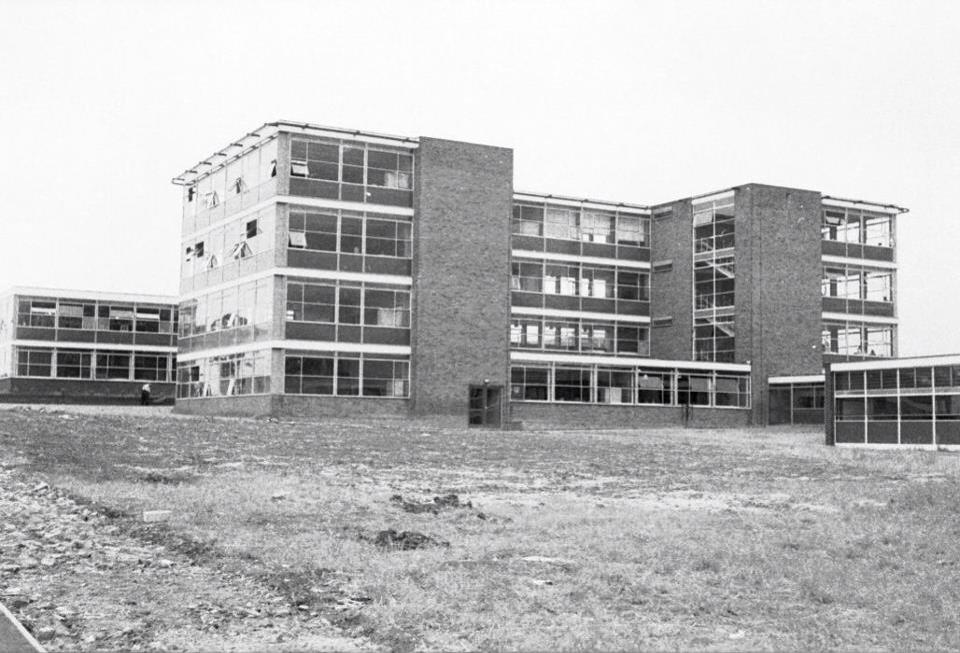
My alma mater, North Romford Comprehensive School - now closed and demolished.


As it happens, I am not a fervent supporter of grammar schools; I didn't go to one and neither did my wife or most of my friends, but I see no reason why they should not exist, nor why parents should not have the opportunity to send their children to them. My wife and I, and our children, went to various comprehensive schools, and while I can't say that my school days were the happiest of my life, I cannot fault the education I got at my school, which was what Alastair Campbell would have called a 'bog-standard comprehensive.' What I am a supporter of, however is freedom of choice, and if people want to send their children to fee-paying, selective schools, they should have the right to; if they want to send them to selective grammar schools, they should be able to. If they want to send them to comprehensive schools - and I reiterate, there is nothing wrong with the comprehensive school - they should be able to.


What they should not have to do is have their choice of school limited by people who make rules that they do not believe should apply to them.

Thursday, 6 October 2016

A Midland Odyssey - Part Nine - Stranger In A Strange Land

In 1998 I was working in the Midas Team in St Magnus House, Lower Thames Street in London. Midas had been developed as a PC based query system for Multicurrency Payments Department (MPD), the area that processes all of the UK Bank's payments, home and abroad[1]. My role was to liaise with the business, gathering requirements, handling their questions and testing the application. It was hard work, but enjoyable, and I must have been pretty good at it, because when the Bank decided to install a version of the application in HSBC's Correspondent Banking Department in Hong Kong, I was chosen to not only test it, but also to travel to Hong Kong and help with the implementation in January 1999.

But as Christmas 1998 approached, my wife Val and I were plunged into a nightmare. Our daughter, Sarah - who was fifteen months old - fell ill. She was fractious and restless, cried all the time and was sleeping poorly. The doctor could not tell what was wrong, and when her condition failed to improve, we took her to the hospital. Again, the doctors were unsure what was the matter, but one of them said - and I will always thank him for this - that we were not taking her home until he had discovered what was wrong. Eventually he asked permission to perform a lumbar puncture - just to rule some things out, he said. When he came back he gave us the devastating news that Sarah had meningitis. I have never been so scared in my life, but fortunately the diagnosis was made in time to get her the treatment she needed and she ultimately made a full recovery, but while she was in hospital - and both Val and I spent nights there, sleeping in uneasy chairs - any thoughts of a trip to Hong Kong were far from my mind.

HSBC Headquarters, Queens Road Central, Hong Kong

Sarah's recovery meant that I was able to fly out to Hong Kong, but not without a sense of apprehension at leaving Val alone with her - and some trepidation at the prospect of two weeks in a strange place, together with the prospect of dealing with the Midas implementation alone, albeit with support from the UK - six thousand miles away and six hours behind.


As I was still a Grade 5 clerk at the time (I think that is GCB7 in the new structure), the Bank didn't exactly push the boat out when they booked my flight and I was shoehorned into Economy for the twelve hour flight, which left at 9pm instead of the scheduled 6pm and meant that I landed in Hong Kong at three o'clock on a Sunday afternoon. And rather than stump up for a hotel, the Bank billeted me with Chris Doyle, a manager in the Correspondent Banking team at his flat in Happy Valley. I don't think that I properly thanked him for his hospitality; as a stranger in a strange land, not having to spend a fortnight in a lonely hotel room, but having some company and being included in the social life of Chris and his fellow ex-pats was something I was grateful for. Chris thoughtfully gave me a piece of paper with his address written in Cantonese and a phonetic English translation (something like "pow ma day surn gayling fong") that was of immense assistance the night I got a cab home alone with a driver who spoke little or no English.

View from The Peak

Hong Kong was a mixture of the familiar and the alien. Out for a walk one lunchtime, I passed well known stores and restaurants; Marks & Spencer, Louis Vuitton, McDonalds, and then, turning a corner into a less well trodden side street, I saw a man with a stick, driving a dozen chickens before him! And this contrast was apparent in the office too. One evening I was involved in a call with my manager in the UK, Raj Soni and the manager of Correspondent Banking in Hong Kong, Geoff Armstrong, who had been my boss at Threadneedle Street International Banking Centre. Having been in a meeting with people I had worked with at home, it seemed odd to walk out of the office that night into Queens Road Central rather than Lower Thames Street. That mixture of the recognisable and the unrecognisable is one thing that makes Hong Kong so alluring, and although I suffered some pangs of home-sickness, the familiar sights and the work made it less painful, even if I suffered chronic jet-lag. Many an evening I would doze off in an armchair, my book falling to the floor with a thud that woke me up, only to find myself unable to sleep once I got to bed, dozing fitfully until the alarm went off, by which point I felt exhausted.

Pictured on her visit to London some months later, Maria Ng from HSBC Hong Kong's Correspondent Banking Department and yours truly.


Although I was only there for two weeks, I saw enough to recognise a subtly different working culture. While in the UK I was used to people arriving at nine, working in a blur until five or five-thirty and then leaving, in Hong Kong I would get to the office just after eight in the morning to find most desks occupied, and leave at six in the evening with people still working. One evening I was still there at 8pm and hardly anyone had gone home. But between times, whereas my colleagues in MPD or the Midas Team would be flat out almost all day, in Hong Kong the daily grind was more laid back. I'm not saying they did less work, just that they seemed prepared to allow the work to progress at a more leisurely pace. Since I was there for two weeks, I had opportunities for sightseeing. I went to The Peak. The famous Peak Tram runs from Central to Peak where there are brilliant views of the city and harbour. I took the equally renowned Star Ferry to Kowloon and the bustling Wan Chai.

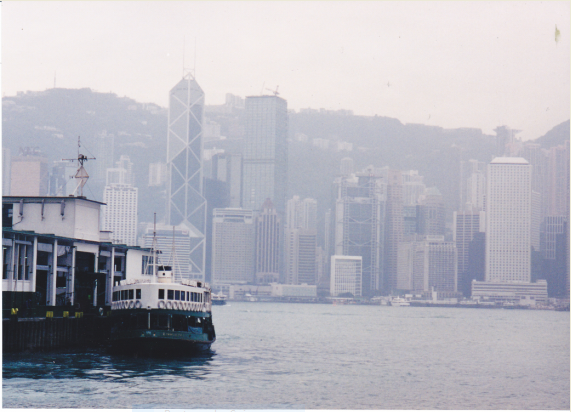
Looking across the harboir from Kowloon


Apart from Hong Kong, the furthest I ever had the chance to travel on bank business were Sheffield and Livingston in Scotland, and the trip to the former British colony (it was handed over to the People's Republic of China in July, 1997) was one I'll never forget. The implementation went as well as could be expected - a few minor glitches, but generally it was rated a success - and I had the chance to see a part of the world I might otherwise have not. I would recommend anyone who gets the opportunity to visit Hong Kong to go, it really is a different world.


Thursday, 29 September 2016

Taking Money From Strangers

Interviewed after his one and only game as England manager, Sam Allardyce related an anecdote about a stranger giving him a 'lucky' coin at the team hotel prior to the match, so it is perhaps fitting that it was taking money from strangers, or at least agreeing to do so, that brought an end to his sixty-seven day, one match, reign.

It isn't the first time that Allardyce has been on the receiving end of allegations of impropriety. In 2006, Allardyce and his son Craig - who is a football agent - were alleged to have taken bribes from agents for signing players. Allardyce senior denies ever taking, or asking for, money, but it may be with those allegations in mind that The Daily Telegraph newspaper included him in an investigation into bribery and corruption in British football that has been ongoing for ten months.


The facts of the story are simply that Allardyce met with men posing as representatives of a Far East company and agreed to travel to Singapore and Hong Kong to give talks on how Football Association rules that prohibit third party ownership of footballers could be circumvented. In return, Allardyce was told that he would receive around £400,000 although as we know, he would never have received such a payment because he would not have had the opportunity to earn that money; the deal was completely bogus. Which begs the question, has Allardyce done anything wrong? Without doubt he has been caught out making a complete error of judgement; he said so himself: "It was an error of judgement...I sort of helped out someone I've known for 30 years," but is an error of judgement like this an offence for which someone can lose their job? In a way, yes inasmuch as although no actual offence has been completed - he did not take any money, he did not give advice on getting round FA regulations - he did in principle agree to commit an offence, which in law is known as an inchoate offence, that is an act that is anticipating or preparatory to a further criminal act. In that respect, were they offences in law rather than breaches of Football Association rules, The Daily Telegraph journalists were, to my mind, on shaky ground in that they were in fact inciting Allardyce to commit an offence.

Adam Lallana scores the only goal of Sam Allardyce's reign. Remember that, it will come up in quizzes before too long.
All of this is beside the point, since Allardyce's contract with the FA was terminated by mutual consent - you have to love that expression, I have no doubt it was more a question of Allardyce agreeing to jump before he was pushed - because his conduct was deemed 'inappropriate' and there can be no doubt that it agreeing in principle to commit an offence is inappropriate in anyone's book. But in some ways, this was almost a sideshow when compared with Allardyce's criticisms of his predecessor, Roy Hodgson, of Gary Neville, and of the redevelopment of Wembley Stadium. The FA's coverall charge 'bringing the game into disrepute' could just have easily have been levelled; it might not have brought him the sack, but the comments he made were hardly becoming of a national team manager in the company of strangers, even if he believed the conversation to be off the record.


Of equal - probably even greater -concern are The Daily Telegraph's investigations into corruption in English football that they maintain reveal that managers, officials and agents have been taking money to arrange player transfers. They claim to have evidence of an assistant manager at 'a high profile football club' accepting a £5,000 payment, that ten managers have taken bribes to fix player transfers, and that a high-profile manager admitted his players broke FA rules by betting on their own games, which he failed to report. In addition two well known managers allegedly discussed working for the same fictitious firm as Sam Allardyce did.

Now the allegations of actual offences are of course, very serious and deserve rigorous investigation by the Football Association and the appropriate penalties imposed if the individuals are guilty, but I am sure I am not the only person uneasy about the ethics of punishing managers who have allegedly discussed working for fictitious firms in ways that would contravene FA regulations. Allardyce called it 'entrapment' and there is no better word for it, and entrapment is a morally difficult concept to defend in every circumstance, however while the law protects against the state (the police for example) causing citizens to perform illegal acts, it does not protect against private parties - newspapers or other sections of the media -doing so. And in those instances, the actions of the private ‘entrapper’ often go beyond what would be deemed appropriate by law enforcement officers.

While there are many who would argue that the actions of The Daily Telegraph have exposed an element of the erstwhile England manager's character that would disbar him from holding that post, it is equally possible to argue that without the newspaper's actions, Allardyce would not have had the opportunity to agree to commit a hypothetical offence. The circumstances are like a thought experiment, akin to Schrodinger's Cat: Is an incitement to commit an offence where the parties to which the offence relate are fictitious and the person inciting the act has no intention of actually commissioning the act nor of paying the person being so incited, an actual offence? And how far does one take this? Perhaps if a football manager were engaged in conversation by a journalist and asked if, hypothetically, he could arrange for a player to be owned by a third party and he said, yes, in theory he could, would that be an offence? No, of course not and Allardyce's actions, while stupid are not much more than one step removed.


But, having spent so long railing against corruption in FIFA and UEFA, the FA could not stand idly by and allow any behaviour that might possibly be construed as corrupt to go unpunished. Sam Allardyce might claim that his only crime is stupidity: as a defence goes, that isn't good enough. And the problem with complaining about entrapment is that unless you say 'No,' you've no defence at all.

Thursday, 22 September 2016

The Green Wheelie Bin Tax

The attempt by Margaret Thatcher's  Conservative government in the late 1980's to introduce what was commonly  called the Poll Tax - more properly the Community Charge -and the ensuing riots driven by the unpopularity of the tax is generally held to be one of the chief reasons for Maggie's demise. Yet it always struck me - and still does, come to that - that the Community Charge was a more equitable way of assessing and collecting local taxes than either the rates that preceded it or the current Council Tax system. Since the system of collecting local taxes known as rates - which began life as the poor rates in the seventeenth century, being replaced by the general rates following the 1925 Rating and Valuation Act - was based solely on the notional value of a property, a family of five wage earners would pay the same as a single pensioner living in an identical property next door, despite using more significantly more local services, and despite having an income several times greater than said pensioner. It seemed to me to fit the principle, "From each according to his ability, to each according to his needs" but many people disagreed.


The problem with the Community Charge was less the principle than the implementation and large families in small properties saw their liability to the local authority increase significantly. With some justification, the tax was seen as saving money for the rich and moving the burden of paying for local services onto the poor. The principle remains sound, however - a family of five will generally consume more local services than a person living alone, however neither will use more street lighting nor be more of a burden on the council's planning department than the other: so perhaps the time is coming for another change in the way in which local taxes are calculated and collected. And I say that because of moves that are afoot in the London Borough in which I live that suggest that in the future council tax bills may be more tailored towards the services we consume and the degree to which we use them.

Only 12% of Barking & Dagenham's revenue comes from Council Tax, while Children's Services represent the largest outgoing.


Now, I have often sung the praises of my local council who, although they require me to pay them the best part of £2,000 per annum, have always provided a good level of service. The streets are clean, the street lights work, my refuse gets collected (albeit the refuse collectors went on strike last year for what seemed like an eternity)and generally the council get on with things with little fuss or bother. And last year, when I was clearing out my mother's house after her death, they came and took away stacks of bulky waste, although they do make an additional, nominal charge for that, which is a direction they - and other councils - are increasingly likely to take. Despite it being extremely difficult to avoid paying Council Tax - in 2014-15 it had a collection rate of 97% - it covers less than 25% of council expenditure, with central government funding and business rates covering the other seventy-five percent. But with cuts in government funding and income from business rates subject to fluctuations as businesses prosper or founder, local council services have come under increasing pressure and all local authorities are faced with the unpalatable alternatives of either having to increase council tax or cut services - or both.


At present my local council collect my domestic waste weekly and my recycling and garden waste fortnightly; next week is the last week when my garden waste will be collected this year and the service should resume next March. But when - or if - it does, I may find myself paying extra, as the council have started a consultation on whether residents would be prepared to pay extra for garden waste collections. And although they estimate it would be as little as £1 per week, I figure it would probably be considerably more than that, since the most efficient way of running such a scheme is to sell residents garden refuse sacks - and the more sacks you use, the more you will pay, or if they continue with the wheelie bin system then I guess I will be paying more than most as due to the size of my front garden (thanks to the large tree in it), I need two wheelie bins, into which I still sometimes struggle to fit all my grass cuttings and the leaves the tree drops. The proposal to charge extra for garden waste collection has predictably provoked many comments on social media, with opponents arguing that they already pay enough in Council Tax and supporters taking the viewpoint that many people pay for the service despite not using it, such as those who live in flats or other properties that have no gardens.

Come Autumn and our wheelie bins get filled with leaves.


I realise that in many other boroughs paying extra for garden waste collection is the norm, but stepping down the road of individual pricing for any service that some people might describe as optional could lead to a rather difficult debate about what an individual pays for versus what they consume. Council tax pays for schools, roads, libraries, children's services and adult social care: it also contributes towards the cost of the police and fire service, and while many of these are core services to which we all should pay, I would argue that some are optional extras. I no longer have children attending school in the borough; in fact since both of my children attended secondary school in a neighbouring borough, it is seven years since I had a child in a school in my borough. So just as the tenant of a flat on the tenth floor of a tower block who generates no garden waste feels they ought not pay for garden waste collection when they have no garden, should I be expected to pay for services like schools or libraries that I don't use? But schools and libraries are essential services, you may say. Well, so is garden waste collection - if you have a garden, because by charging extra for it, councils risk residents refusing to pay and  fly-tipping their waste, which then costs even more to clear.

Fly tipping is a major problem. This mile long tip appeared overnight near the Dartford Crossing in November 2014. Photo: East News

But whether it is individual prices for optional services, privatising services, or sharing services and resources with neighbouring boroughs, the way in which local authorities raise income and how they spend it will change. Council partnerships with private enterprises are increasingly the norm, while merging some services with those in other boroughs is also an increasing trend. The changes to the landscape of local government services that are currently in train are being delivered incrementally and at varying rates to varying degrees across the country rather than in one fell swoop, yet they are  possibly even more fundamental than the introduction of the so-called Poll Tax. Unlike the protests against the Poll Tax, I doubt there will be protesters marching on Barking Town Hall towing green wheelie bins.

Thursday, 15 September 2016

Are You Experienced?

As a heterosexual, white male, I suppose it is understandable that I have not experienced discrimination (not knowingly, at least) so I am not by no means an expert on the subject - although as I am now in my late fifties, some sort of age related discrimination may be on the cards at some point soon. In a case that has attracted a good deal of publicity recently, former Apple engineer JK Scheinberg - aged 54 and with 21 years experience with the company - has failed to clinch a job at an Apple Store Genius Bar. Scheinberg retired in 2008 but decided that he wanted to get back into work, and with his background with the company thought that he would be a shoo-in for the role, despite being significantly older than the other interviewees.

JK Scheinberg


 "On the way out, all three of the interviewers singled me out and said: 'We’ll be in touch'.  I never heard back," he told the New York Times. So, was Scheinberg not employed solely due to his age, as has been implied? Apple have not yet commented on this, but their website affirms their commitment to being an equal opportunity employer, and being committed to inclusion and diversity. Which of course amounts to nothing at all, since words are cheap, but on the other hand, could Scheinberg not have been employed because - shock, horror - he wasn't suitable? He must be suitable, you might think, after twenty-one years as an Apple engineer responsible for - among other things - the first builds of OS X for Intel processors. He also worked on A/UX - Apple's implementation of the Unix operating system, and the Rhapsody operating system, so he is obviously highly qualified. "Are you experienced?" they might have asked him, and undoubtedly he is, but is it the right sort of experience?


Because how many people do you think make appointments at Apple's Genius Bar for a Unix related problem? Or have an issue with their Intel processor? Not many would be my guess. People go to the Genius Bar because their iPad is on the blink, the battery in their iPod had died, or because the latest iOS update has bricked their iPhone and no matter how much of a genius Scheinberg might be at back-end, mainframe type stuff, that means diddly squat when dealing with the average Genius Bar query. And of course, he's been out of the organisation for eight years, which in the technology business is a lifetime. That said, it's likely that while his experience and expertise might not be directly relevant to a role on the Genius Bar, it's equally likely that his background would not rule him out entirely as a good candidate for the job.  But, after a career in computer engineering, dealing with similarly minded people, how are his people skills, particularly when faced with a confused, technologically challenged, owner of a new iPhone they cannot make head or tail of?

Updating iOS...


In many ways what happened to Scheinberg is a non-story (unless he decides to take legal action against the company and that becomes some sort of cause célèbre), just one of many that I've seen on media websites and in social media feeds recently. In the days when our news consumption was limited to newspapers, TV and radio, there was only so much news that was printed or broadcast. Now the insatiable appetite of the internet means that the minutiae of life that would never have made it to print is plastered all over the web for our perusal - and increasingly - comment. For example ,there is a story that has appeared in the last week about a car driver getting a parking fine, despite having paid and displayed in a car-park in Poole, Dorset. Apparently Brian Hewlett paid £3 for two hours worth of parking but subsequently received a demand for £100 as when he was asked to enter his car registration number upon buying his ticket, he entered ‘EK002EEUV’ instead of ‘EK02EEU,’ because he was not wearing his glasses.  Maybe Mr Hewlett should have taken more care when entering his registration number. Maybe the company that run the car park should have used a bit of discretion and not penalised someone who had actually paid the parking fee. Maybe the paper that published the story on their website should have spiked it - it isn't a story, and I know that I should not have bothered reading it. It's even less of a story than Mr Scheinberg's tale - which is effectively just 'retired man applies for job and doesn't get it' - but there's little in it.

If Mr Hewlett had worn his glasses, there would have been no story. There wasn't really one anyway.


There is no doubt that legislation that fights discrimination in the workplace - at the recruitment stage and during employment - is a good thing, although there is an argument that it has actually gone too far - and it may be that Mr Scheinberg has a point when he suspects that, given he is at least twice the age of the average Genius Bar employee, his failure to secure a role was based on his age rather than anything else. But consider this too. Scheinberg's motive for applying for the job was that he was finding retirement boring; he was restless and wanted something to do. On his pension from Apple, I somehow suspect that he didn't need the money. So on that basis, a factor in passing him over - presumably in favour of someone younger - could have been that Apple thought it better to employ someone who was competent enough and in need of a job to pay their mortgage, put food on the table and pay their bills rather than a bored, retired Apple engineer who could have done some voluntary work if tackling boredom was his primary objective.

There is a balance to be struck in recruitment between the needs of the company and the rights of the prospective employee. And on the one hand, while experience is important - goodness knows, I often felt that the organisation I worked for seriously undervalued it at times - there's no way to get experience if you cannot get a job. And if you cannot get a job because you are blocked by a bored, retired, former senior employee who wants something to do, isn't that a form of discrimination too?


Thursday, 8 September 2016

Eat That Frog!

Of my faults - which, according to my other half, are many and various - one to which I will readily admit is procrastination. While some people may live by the motto, "Never put off till tomorrow what you can do today," I am more likely to follow the maxim that one should, "Never put off till tomorrow what can be put off indefinitely."

Okay, I may not be entirely serious in saying that, but I'm sure I am not alone in that I have at times put things off for so long that the problem eventually goes away. This can be a good thing sometimes in that a difficult task, put off long enough, might eventually become unnecessary through a change of circumstances. Or a bad thing, as an opportunity is missed or a minor problem becomes a major one. And all too often a task that has been put off becomes still more difficult because there is so much less time in which to complete it. None of this is exactly startling; I have not stumbled on some previously undiscovered trait of human behaviour, but what I did not know (and I have a feeling many of you would not have known either), is that there is a World Fight Procrastination Day, and it was this week; Tuesday 6th September to be precise. Naturally, the first thing I did when I learned this was to Google it, and found that there is no official website for World Fight Procrastination Day: presumably no one has got round to setting one up yet.


What Googling "World Fight Procrastination Day" did find was a whole host of websites that suggest how one should deal with one's procrastination habit, and top of the list comes Mark Twain's advice that the first thing you should do each day is eat a live frog, because that will be the worst thing you have to do each day. In other words, begin the day with the task that you least want to start, and once it is done, the day cannot get any worse and that unpleasant chore will be out of the way.

That's good advice, except in my experience the counter arguments can be seductive and persuasive. First, that task may be a time consuming one, and while it is important, it may not be time critical (well, not yet, but it soon will be), and just look at all those easy, little jobs that aren't as important but are more urgent. Let's get them done, get a few quick wins and then that frog eating task can be attacked without all those other jobs worrying away at the back of your mind; a major justification for putting off some unpleasant, or difficult task is the promotion of other, easier tasks which have far less importance. You know the sort of thing; that task that requires pulling together multiple strands of research and analysing the resulting data and compiling a report for your boss that he wants on his desk this time next week (straightforward, non-urgent but time consuming) suddenly seems a much more attractive proposition than liaising with your HR department to arrange a disciplinary hearing for an underperforming member of your team. For some, it could be the other way round, but for me the most likely tasks I would procrastinate over at work were the touchy-feely, people skill needing, potentially confrontational ones rather than the more technical ones.

And procrastination gives great scope for worriers (like me) to exercise their worry muscles. You can worry about the task in prospect (how do I do it?), worry about putting it off (will I have enough time to do it now?), worry while you actually do it (am I doing it right and have I got enough time?), and worry about it in hindsight (could I have done it better if I hadn't put it off for so long?)

No wonder then that studies have shown that regular procrastination increases stress and anxiety, reduces productivity and may have a negative impact on someone's work performance, to which I would add that it can add a strain on personal relationships too. Just as the procrastinator will put off that difficult or stressful task at work, so they may put off talking about some personal issue, or delivering bad news at home, and with friends or family. At home, the procrastinator will worry about the consequences of broaching a subject - what will the other party's reaction be? And worries about the fact that by delaying bringing the matter up, it will just make it worse. The worst case scenario is that the matter is not brought up until it is too late, with inevitably disastrous consequences.

The garage after a major tidying exercise (sadly, no pictures exist of it before).
Putting things off is frequently justified by the procrastinator by the act of prevarication. If procrastination is the thief of time, then prevarication is the armed robber. Procrastination picks time's pocket; prevarication takes it into a dark alley and mugs it at knifepoint. Prevarication marshals all of the reasons for not doing something, launches them in a blitzkrieg like frenzy and bludgeons the procrastinator  into not doing something because that appears infinitely preferable to doing it.

Some things are more serious things than others if they get put off - the faint but persistent smell of gas that doesn't get investigated is likely to have more serious consequences  than not dealing with that pile of old newspapers that have accumulated in the corner of the lounge and really need bundling up and putting in the recycling.  But even the most innocent of tasks, if procrastinated over long enough, can be a cause of inconvenience, if not exactly dangerous. Val and I have spent the last few weeks undertaking what I can only describe as a major exercise in tut, tat and detritus clearance. We hired a skip (see One Man's Trash) and cut down an old conifer tree that had died a lingering and unsightly death in the corner of the garden, cleared the shed and the garage (where I assembled three new shelving units to supplement the two already there) and generally tidied on a scale not normally seen other than in advance of a visit from the Queen. Going into the shed or garage is now a perfectly normal activity and not like embarking on an assault course.

A rather poorly looking conifer in the rain, and (below) with it removed.


We went through all of the files in the study, binning the old instructions for lawnmowers, hi-fi systems and kettles that have long since bitten the dust (and who needs an instruction manual for a kettle anyway?) The pile of old receipts, bank statements and random letters from random people that, along with a major collection of old boxes and cardboard, we had kept 'just in case' have been dealt with and a major resolution has been made not to allow that sort of situation to repeat itself: no way do I want to undertake the monumental task of shredding that number of old documents that contain some sort of personal detail again. 

To my surprise, I have been inspired by the work we have done, to the extent that I have rooted around through loads of old personal stuff, binning piles of papers, tidying football programmes and generally organising myself. It's addictive and now that the only things I have to do genuinely have to wait, I'm getting impatient and suffering from withdrawal symptoms.

I would like to think that the days of procrastination and prevarication are behind me, although like being addicted to something, it will be hard not to fall into the old, bad habits, but I'm going to try. I'll let you know how I get on...if I don't put it off.


Thursday, 1 September 2016

Falling Off A Cliff

Politics is not a particular interest of mine, but I can't help be morbidly fascinated by the current machinations within the Labour party. I confess to knowing only a little about Jeremy Corbyn, and much less about Owen Smith, his opponent in the Labour leadership race, but even a casual glance at the pronouncements of both men leads me to believe that Mr Corbyn has his feet a little more firmly on the ground than his opponent...although it's a close run thing.

Can Owen Smith really eradicate homelessness? No, really can he?


It isn't unusual for politicians to make bold promises when they are trying to get elected and it really is a shame that they are not taken to task more regularly and more robustly when, once in office, they fail to meet their pledges. For the record, I'm talking about all politicians, local and national, and of all political persuasions here - not just Labour ones. But it is rare that anyone, after an election, looks back and says to a Prime Minister, or council leader for that matter, and says, "Where's that income tax cut you promised?" or "What happened to the extra nurses/policemen/doctors/binmen/road sweepers you said you would recruit?" Thing is, we all know it's a game; all politicians make pledges that they soon come to realise they cannot afford - be it politically or financially - to implement. And Messrs Corbyn and Smith are no different.

Jeremy Corbyn's reserved seat failed to meet his expectations.


Jeremy Corbyn has pledged to renationalise the railways if Labour come to power  - and by the by, despite Labour's stance on Europe, a full renationalisation would not be possible had the electorate voted to Remain in the EU rather than in favour of Brexit -and also to build a million new homes within five years of becoming Prime Minister. This scheme would apparently be funded by a new National Investment Bank, and it's all very laudable: I doubt anyone would dispute that house prices and rental costs are becoming increasingly beyond the reach of many young people. But given that the next General Election is not scheduled for four more years, then Mr Corbyn's scheme has a minimum of nine years before it can come to fruition, assuming he wins the next election - actually, assuming he is even leader of the party come the next election.

But anything Mr Corbyn can promise, Mr Smith can top, it seems. Pledging to build a million new homes is small beer to Mr Smith, as he has pledged to eradicate homelessness completely within five years, apparently by passing the buck on to local councils and putting the problem in their court, which would enable him to take the credit for any success and pass on the blame for the more likely failure. Mr Smith has also promised to scrap university tuition fees, build 50,000 homes a year solely for rent by the under-30's and guarantee a high-level apprenticeship to every 18-year-old who gets good enough exam grades. Precisely how much this would cost - and more importantly, how it would be funded - is anyone's guess, but given that one of Labour's traditional methods of funding such exercises is increasing taxes for higher earners, perhaps this will lead to more of the wealthy becoming tax exiles, like Sir Richard Branson, whom Shadow Chancellor John McDonnell has suggested should be stripped of his knighthood. Mind you, that wasn't simply because of Sir Richard's tax exile status, but rather because, according to McDonnell, Branson was trying to 'undermine our democracy' after he, or rather Virgin Trains, had responded to Jeremy Corbyn's remarks about overcrowding on one of their services. Whether it was Corbyn or Branson who was right, I do not think that responding to an attack that one feels is unjustified - which is obviously how Virgin felt about the criticism they received from the Labour leader - is an attack on democracy. If refuting an assertion you believe to be incorrect undermines democracy then almost every MP is guilty of it every time they speak in the House, or anywhere else for that matter.

It's funny that Mr Corbyn's claims morphed so over a short period of time. First off, the train was packed, with no spare seats. Virgin refuted that, produced CCTV footage of Mr Corbyn walking past empty seats, to which the Labour leader responded that the seats were occupied by other passengers' bags, and later, that there were empty seats, but insufficient together for him and his wife to sit together. As my wife is wont to say, "When you're in a hole, stop digging."


Brendan O'Carroll looks as stunned as everyone else on hearing the news that his show is best sit-com of the 21st century.
While the news of what has now, inevitably, been dubbed Traingate amused me, there was another story that I saw at roughly the same time that I did not find funny at all, which is odd, since the news related to a television sit-com. And not just any old sit-com either, but the sit-com that 14,000 readers of the Radio Times have voted best sit-com of the 21st century so far. Ladies and gentlemen, I give you -and I can hardly bear to bring myself to do so - Mrs Brown's Boys. Now I will accept that what constitutes the best of anything that has to be judged as subjectively as a television comedy programme is predicated on the principle that anyone's opinion is as good as anyone else's, and the fact that Mrs Brown's Boys beat a whole host of programmes that I consider to have greater merit is neither here nor there. Just because a show is voted best comedy of the century doesn't actually make it the best, just the best in the opinion of enough people who could be bothered to vote. I wasn't among the voters, but had I been there were quite a few candidates that would have got my vote before I got to Brendan O'Carroll's creation.  In this poll, innovative, genuinely funny (well, I think they are innovative and genuinely funny) shows like W1A and Outnumbered trail in the wake of what appears to me to be a tired, old fashioned and unoriginal show.  Mind you there are a few  others in the top twenty (listed below), that most certainly would not have got my vote either, plus a few I've not even heard of.

"Ooh, you are awful!" Too flippin' right you are!

The result of the poll has certainly caused plenty of people - television critics and the general public (via social media) alike - to voice their opinions, and those opinions are, as one might expect, polarised. My view on it is coloured by the fact that Brendan O'Carroll plays the part of Mrs Brown; not that I have anything against Mr O'Carroll personally, it's just that I really cannot abide men playing women. It's probably a reaction to when I was a child and being subjected to programmes starring Danny La Rue, or Dick Emery or Stanley Baxter. Emery was OK when he stayed in menswear, but when he put on drag, I switched off -metaphorically, if not literally. And as for Baxter, well unfortunately I found him uniformly unfunny and as an impressionist, totally unconvincing - every impression looked the same, and every impression looked and sounded like Stanley Baxter to me.

"You don't have to fall off a cliff to know it hurts."
At this point I should point out that I have never watched a whole episode of Mrs Brown's Boys, just clips and trailers. These alone have been enough to put me off. On that basis there are probably those among you who would argue that I can't have a proper opinion if I've not seen a whole episode. To those who say that, I would refer you to a line from my comedy hero, Tony Hancock: "You don't have to fall off a cliff to know it hurts."

How England Were Nearly Denied The 1966 World Cup

In 2017, during the bidding process to determine who would host the 2026 World Cup, FIFA President Gianni Infantino addressed the travel ba...